
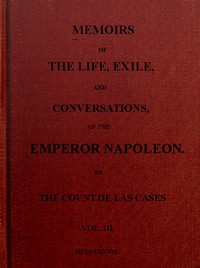
Memoirs of the life, exile, and conversations of the Emperor Napoleon. (Vol. III)
Written by Emmanuel-Auguste-Dieudonné Las Cases
Chaptra reads alongside you — AI insights, chapter breakdowns and reader discussions for every book. Join free
About this book
Reading guide
Themes, characters and key ideas in Memoirs of the life, exile, and conversations of the Emperor Napoleon. (Vol. III), written by Chaptra AI.
- about 25 hours
- advanced
- reflective
- historical
- contemplative
Las Cases's "Memoirs of the Life, Exile, and Conversations of the Emperor Napoleon" (Vol. III) offers an intimate, first-person account of Napoleon Bonaparte's final years in exile on St. Helena. Through daily conversations and reflections recorded by his loyal companion, Count de Las Cases, the work delves into Napoleon's thoughts on his past campaigns, political ambitions, and the legacy he wished to leave behind. It serves as a crucial historical document, providing unparalleled insight into the mind of the deposed emperor as he grappled with his circumstances, meticulously reconstructing his narrative for posterity. The memoir, therefore, functions as both a personal testament and a deliberate act of historical revisionism, profoundly shaping the Napoleonic legend.
“"What a romance my life has been!"”
Key themes
- Legacy and Historical Memory
- This is the overarching theme, as Napoleon is acutely aware of his place in history and actively works to shape how he will be remembered. His conversations are often veiled attempts to justify his actions, explain his motivations, and cement a positive image for posterity. The memoir itself is an extension of this effort, a deliberate construction of historical memory.
- Power and Exile
- The memoir vividly portrays the stark contrast between Napoleon's past omnipotence and his current state of enforced idleness and confinement. It explores the psychological toll of losing absolute power, the frustration of being a spectator to world events, and the resilience required to maintain dignity and purpose under such circumstances. It's a study of power's transient nature and its profound impact on identity.
- Self-Justification and Interpretation
- A significant portion of Napoleon's conversations involves explaining, defending, and re-interpreting his controversial decisions and actions throughout his career. This theme delves into the human tendency to rationalize one's past, present one's motivations in the best possible light, and construct a coherent, often self-serving, narrative of one's life. It highlights the subjective nature of personal memory and historical interpretation.
Worth discussing
To what extent can Las Cases's memoirs be considered an objective historical source, given his relationship with Napoleon and the emperor's clear intent to shape his legacy?
Chapter-by-chapter breakdowns, character arcs and the full thematic analysis come with a free account.
Discussions
No one has started one yet
Questions this book opens up
No discussions yet
Be the first to start a discussion about this book!
Sign up to start the discussionReviews
No reviews yet
Be the first to review this book!