
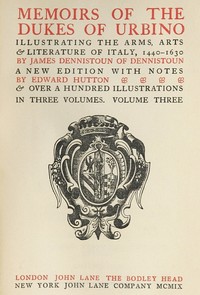
Memoirs of the Dukes of Urbino, Volume 3 (of 3): Illustrating the Arms, Arts, and Literature of Italy, from 1440 To 1630
Written by James Dennistoun
Chaptra reads alongside you — AI insights, chapter breakdowns and reader discussions for every book. Join free
About this book
Reading guide
Themes, characters and key ideas in Memoirs of the Dukes of Urbino, Volume 3 (of 3): Illustrating the Arms, Arts, and Literature of Italy, from 1440 To 1630, written by Chaptra AI.
- about 25 hours
- advanced
- historical
- scholarly
- somber
Dennistoun's "Memoirs of the Dukes of Urbino, Volume 3 (of 3)" provides a meticulous historical account of the Della Rovere dynasty's rule over Urbino from 1440 to 1630, emphasizing their significant contributions to Italy's military, artistic, and literary landscapes. This volume particularly delves into the tumultuous political climate of 16th-century Italy, marked by the intricate power struggles between Italian city-states, the Papacy, and encroaching foreign powers. A central focus is the catastrophic Sack of Rome in 1527, meticulously detailing the Papacy's misjudgments, the ensuing chaos, and the brutal impact on the city's populace. Through this lens, the book explores the broader implications of such historical incidents on the society and culture of Renaissance Italy, offering a comprehensive look at an era defined by both grandeur and devastation.
“The annals of Italy, fraught with the ambition of popes and princes, offered no spectacle more dire than the misguided confidence preceding Rome's fall.”
Key themes
- Power and Political Instability
- This theme is central, exploring the intricate and often brutal power struggles between Italian city-states, the Papacy, and powerful foreign entities like the Holy Roman Empire and France. The book meticulously details how alliances shifted, betrayals occurred, and military might dictated the fate of regions, illustrating the constant state of flux in 16th-century Italian politics.
- Military Strategy and Leadership Failure
- Explored through the detailed account of the Sack of Rome, this theme examines the critical impact of military preparedness, strategic foresight, and effective leadership (or lack thereof) on the outcome of conflicts. The Pope's 'misguided confidence and poor military preparations' serve as a prime example of how leadership failures can lead to catastrophic consequences.
- The Human Cost of Conflict
- The detailed depiction of the Sack of Rome brings to the forefront the devastating impact of war on civilian populations. This theme explores the atrocities committed, the panic, suffering, and loss experienced by the inhabitants, serving as a stark reminder of the brutal reality behind grand political and military strategies.
Worth discussing
How does Dennistoun's portrayal of the Sack of Rome reflect the broader political and military climate of 16th-century Italy?
Chapter-by-chapter breakdowns, character arcs and the full thematic analysis come with a free account.
Discussions
No one has started one yet
Questions this book opens up
No discussions yet
Be the first to start a discussion about this book!
Sign up to start the discussionReviews
No reviews yet
Be the first to review this book!