
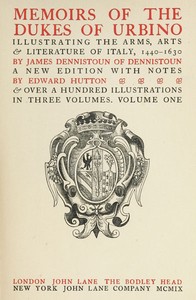
Memoirs of the Dukes of Urbino, Volume 1 (of 3): Illustrating the Arms, Arts, and Literature of Italy, from 1440 To 1630.
Written by James Dennistoun
Chaptra reads alongside you — AI insights, chapter breakdowns and reader discussions for every book. Join free
About this book
Reading guide
Themes, characters and key ideas in Memoirs of the Dukes of Urbino, Volume 1 (of 3): Illustrating the Arms, Arts, and Literature of Italy, from 1440 To 1630., written by Chaptra AI.
- about 12 hours
- advanced
- Informative
- Scholarly
- Historical
James Dennistoun's "Memoirs of the Dukes of Urbino, Volume 1" offers a meticulously researched 19th-century historical account of the Duchy of Urbino from 1440 to 1630, focusing on its rulers and their profound impact on Italian arms, arts, and literature. This initial volume establishes the groundwork for an extensive examination, highlighting Dennistoun's rigorous archival research across Italy. It particularly emphasizes the pivotal roles of Duke Federigo and his son Guidobaldo, showcasing how their governance fostered significant cultural and political advancements. The memoir intricately links the ducal family's influence to the vibrant artistic and literary developments of the Italian Renaissance, promising a rich narrative of historical enlightenment.
“The history of Urbino stands as a testament to how robust governance and strategic military prowess could forge an environment where the finest expressions of art and intellect might flourish.”
Key themes
- Patronage and the Arts
- This theme explores how the Dukes of Urbino actively fostered and funded artistic, architectural, and literary endeavors, transforming their court into a vibrant cultural hub. Dennistoun highlights how this patronage attracted leading figures of the Renaissance and led to the creation of enduring masterpieces, emphasizing the ducal family's role as enlightened supporters of creativity.
- Power and Governance
- Dennistoun details the political strategies, military prowess, and diplomatic maneuvering employed by the Dukes of Urbino to establish, maintain, and expand their authority within the complex and often volatile political landscape of Renaissance Italy. This theme examines how effective governance created the stability necessary for cultural flourishing.
- Historical Legacy
- The book is fundamentally concerned with establishing and analyzing the enduring impact of the Dukes of Urbino on Italian and European history. Dennistoun examines how their actions in arms, arts, and literature contributed to their lasting fame and influenced subsequent generations, highlighting the quest for immortality through great deeds and cultural achievements.
Worth discussing
How does Dennistoun's 19th-century perspective influence his portrayal of the Renaissance dukes and their era?
Chapter-by-chapter breakdowns, character arcs and the full thematic analysis come with a free account.
Discussions
No one has started one yet
Questions this book opens up
No discussions yet
Be the first to start a discussion about this book!
Sign up to start the discussionReviews
No reviews yet
Be the first to review this book!