
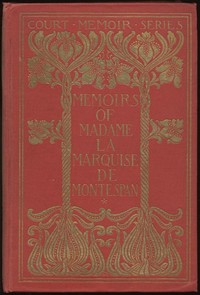
Memoirs of Madame la Marquise de Montespan — Complete
Written by Madame de Montespan
Chaptra reads alongside you — AI insights, chapter breakdowns and reader discussions for every book. Join free
About this book
Reading guide
Themes, characters and key ideas in Memoirs of Madame la Marquise de Montespan — Complete, written by Chaptra AI.
- about 20 hours
- advanced
- Reflective
- Historical
- Dramatic
Madame de Montespan's complete memoirs offer an intimate first-person account of life at the opulent yet treacherous court of Louis XIV. Through the eyes of Athenais de Tonnay-Charente, the Marquise de Montespan, the narrative traces her ascent as the King's favorite, detailing her tumultuous relationship with the monarch, the challenges of her marriage, and the relentless public scrutiny she endured. The memoirs serve as both a historical document and a personal reflection, revealing the intricate web of power, ambition, and personal drama that defined one of Europe's most magnificent courts, all while hinting at the scandal and eventual decline that marked her later years.
“"One does not simply 'choose' a life at court; one is devoured by it, piece by piece, until only the gilded cage remains."”
Key themes
- Power and Influence
- The memoirs are a profound exploration of the mechanics of power at the French court, particularly how it is gained, maintained, and lost. Montespan details the intricate dance of favor, the constant struggle for the King's attention, and the fragility of influence, illustrating how personal relationships were inextricably linked to political standing.
- Love, Desire, and Obsession
- Central to the memoirs is Montespan's complex relationship with Louis XIV, which oscillates between genuine affection, passionate desire, and the pragmatic necessity of maintaining her position. The theme explores the nature of love within a political context, the destructive power of obsession (both her own and the King's), and the emotional toll of such a public and precarious affair.
- Hypocrisy and Morality
- Montespan's memoirs implicitly and explicitly critique the moral contradictions and pervasive hypocrisy of the French court. She exposes how religious piety was often a facade for ambition, how moral pronouncements were selectively applied, and how personal conduct was often sacrificed at the altar of social standing and royal favor. This theme is particularly poignant in her reflections on her own spiritual journey and the judgment she faced.
Worth discussing
To what extent can Montespan's memoirs be considered a reliable historical document, given her personal biases and motivations?
Chapter-by-chapter breakdowns, character arcs and the full thematic analysis come with a free account.
Discussions
No one has started one yet
Questions this book opens up
No discussions yet
Be the first to start a discussion about this book!
Sign up to start the discussionReviews
No reviews yet
Be the first to review this book!