
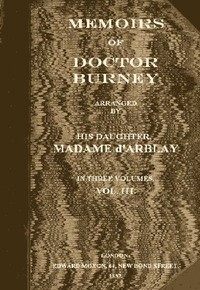
Memoirs of Doctor Burney (Vol. 3 of 3): Arranged from his own manuscripts, from family papers, and from personal recollections by his daughter, Madame d'Arblay
Written by Fanny Burney
Chaptra reads alongside you — AI insights, chapter breakdowns and reader discussions for every book. Join free
About this book
Reading guide
Themes, characters and key ideas in Memoirs of Doctor Burney (Vol. 3 of 3): Arranged from his own manuscripts, from family papers, and from personal recollections by his daughter, Madame d'Arblay, written by Chaptra AI.
- about 8 hours
- advanced
- reflective
- poignant
- historical
Memoirs of Doctor Burney (Vol. 3 of 3) by Fanny Burney offers an intimate, biographical portrayal of her father, Dr. Charles Burney, focusing on the latter part of his life and his enduring legacy. This concluding volume is particularly poignant in its depiction of Dr. Burney's profound friendship with Samuel Johnson, chronicling their emotional final encounters before Johnson's death in 1784, revealing a mutual respect and deep affection. Drawing from personal recollections, family papers, and his own manuscripts, Fanny Burney crafts a narrative that not only illuminates her father's intellectual life as a physician and musicologist but also captures the societal and personal dynamics of the Georgian era. The memoir further hints at Dr. Burney's subsequent resilience, detailing how he coped with the significant loss of Johnson while steadfastly navigating his professional commitments and personal challenges, ultimately solidifying his place within literary and musical history.
“"The lamp of genius, though flickering, burnt with an undiminished, almost defiant, brilliance even in his final earthly moments."”
Key themes
- Friendship and Loss
- This theme explores the profound depth of human connection and the inevitable pain of parting. The memoir vividly portrays the intimate bond between Dr. Burney and Samuel Johnson, particularly in Johnson's final days, highlighting the emotional weight of their shared history and the sorrow of impending separation. It also delves into Dr. Burney's subsequent grief and his process of coping with the void left by such a significant friendship.
- Legacy and Memory
- The memoir itself is an act of preserving legacy and memory. Fanny Burney's meticulous compilation of her father's life story from various sources underscores the human desire to ensure that significant lives and contributions are not forgotten. It explores how individuals are remembered, the impact of their work, and the role of biography in shaping historical perception.
- Intellectual Life of the Georgian Era
- The memoir provides a rich and detailed window into the vibrant intellectual and social landscape of late 18th-century England. Through Dr. Burney's friendships and professional engagements, the narrative illustrates how literature, music, philosophy, and social discourse intertwined, revealing the interconnectedness of prominent figures and the cultural values of the time.
Worth discussing
How does Fanny Burney's role as Dr. Burney's daughter influence the narrative and our perception of her father?
Chapter-by-chapter breakdowns, character arcs and the full thematic analysis come with a free account.
Discussions
No one has started one yet
Questions this book opens up
No discussions yet
Be the first to start a discussion about this book!
Sign up to start the discussionReviews
No reviews yet
Be the first to review this book!