
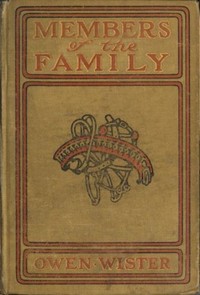
Members of the Family
Written by Owen Wister
Chaptra reads alongside you — AI insights, chapter breakdowns and reader discussions for every book. Join free
About this book
Reading guide
Themes, characters and key ideas in Members of the Family, written by Chaptra AI.
- about 8 hours
- intermediate
- humorous
- insightful
- witty
Owen Wister's "Members of the Family" is an early 20th-century novel that vividly portrays the evolving American West through the eyes of its memorable characters. At its heart is Scipio Le Moyne, a witty and insightful individual recovering from a rodeo accident, whose journey explores the complexities of frontier life and identity. The narrative is rich with humorous interactions and sharp observations, particularly in Scipio's conversations with the Virginian and his musings on figures like Horacles. Through these engaging dynamics, the book offers a blend of comedy and social commentary, capturing the essence of a world transitioning from rugged individualism to a more communal society, all while Scipio grapples with his own aspirations and insecurities.
“"A man's true nature, like a good horse, often reveals itself best after a tumble."”
Key themes
- Western Identity and Evolution
- The novel deeply explores what it means to be a Westerner in a period of transition. It examines how the rugged individualism traditionally associated with the cowboy era begins to intertwine with the need for community and adaptability. Characters like Scipio grapple with their past experiences and future aspirations, reflecting the broader societal shifts in the American West.
- Humor and Social Commentary
- Wister masterfully uses humor, particularly through Scipio's witty observations and storytelling, as a primary vehicle for social commentary. The comical interactions and the character of Horacles serve not just for amusement but to highlight human foibles, the peculiarities of frontier life, and the subtle dynamics of social interaction. This allows for a gentle yet incisive critique of human nature and societal norms.
- Communication and Storytelling
- A central focus, particularly through Scipio Le Moyne, is the exploration of how people communicate and the power of storytelling. Scipio's knack for narration and his sharp observations highlight the nuances, challenges, and joys of human interaction. The novel suggests that stories are not just entertainment but crucial tools for understanding oneself, others, and the world.
Worth discussing
How does Scipio Le Moyne's physical recovery mirror or symbolize the broader transformation of the American West depicted in the novel?
Chapter-by-chapter breakdowns, character arcs and the full thematic analysis come with a free account.
Discussions
No one has started one yet
Questions this book opens up
No discussions yet
Be the first to start a discussion about this book!
Sign up to start the discussionReviews
No reviews yet
Be the first to review this book!