
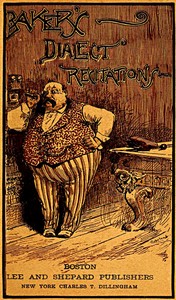
Medley Dialect Recitations, Comprising a Series of the Most Popular Selections in German, French, and Scotch
Written by Unknown author
Chaptra reads alongside you — AI insights, chapter breakdowns and reader discussions for every book. Join free
About this book
Reading guide
Themes, characters and key ideas in Medley Dialect Recitations, Comprising a Series of the Most Popular Selections in German, French, and Scotch, written by Chaptra AI.
- about 6 hours
- intermediate
- humorous
- nostalgic
- cultural
"Medley Dialect Recitations" is a historical anthology designed for performance, compiling popular selections in German, French, and Scotch dialects. Published without a credited author, its primary purpose was to provide material for elocutionists and entertainers to perform humorous, sentimental, or character-driven pieces reflective of various cultural identities. The collection serves as a cultural artifact, showcasing popular perceptions and linguistic representations of these groups during its era, highlighting the performative aspect of dialect literature rather than a cohesive narrative.
“As this book is a collection of various recitations from an unknown author, specific overarching 'key quotes' are not applicable. However, the essence of its 'quotes' lies in the vivid, often exaggerated, linguistic expressions of the German, French, and Scotch dialects, designed to evoke immediate character and humor through their unique syntax, vocabulary, and phonetic spellings. Individual recitations would contain memorable lines characteristic of their specific dialect and narrative.”
Key themes
- Cultural Identity and Representation
- This theme explores how the distinct German, French, and Scotch dialects are used to construct and represent specific cultural identities. The recitations, through their linguistic choices, aim to evoke the customs, mannerisms, and perceived psychological traits of these groups, often for comedic or sentimental effect. It's a study in how a dominant culture interprets and portrays 'the other' through language.
- Performance and Oral Tradition
- The book's explicit purpose as a collection of 'recitations' highlights its connection to oral tradition and performance art. These pieces were meant to be spoken aloud, embodying characters and narratives through vocal delivery, accent, and dramatic interpretation. It reflects a period when public readings and elocution were central forms of entertainment and cultural transmission.
- Humor and Satire
- A significant portion of dialect recitations were intended to be humorous, often deriving comedy from linguistic misunderstandings, cultural quirks, or exaggerated character traits. The book serves as a historical record of what was considered funny in relation to different ethnic groups, sometimes veering into satire or gentle mockery, but often aiming for lighthearted amusement.
Worth discussing
How does the use of dialect in literature contribute to or detract from cultural representation, particularly in historical contexts?
Chapter-by-chapter breakdowns, character arcs and the full thematic analysis come with a free account.
Discussions
No one has started one yet
Questions this book opens up
No discussions yet
Be the first to start a discussion about this book!
Sign up to start the discussionReviews
No reviews yet
Be the first to review this book!