
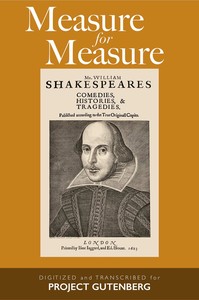
Measure for Measure
Written by William Shakespeare
Chaptra reads alongside you — AI insights, chapter breakdowns and reader discussions for every book. Join free
About this book
Reading guide
Themes, characters and key ideas in Measure for Measure, written by Chaptra AI.
- about 8 hours
- advanced
- dark
- morally ambiguous
- thought-provoking
William Shakespeare's "Measure for Measure" is a complex 'problem play' that delves into the intricacies of justice, mercy, and moral hypocrisy. Set in a morally corrupt Vienna, Duke Vincentio feigns absence, disguising himself as a friar to observe his deputy Angelo, who enforces dormant laws with draconian strictness. The plot ignites when Angelo condemns Claudio for fornication, leading Claudio's virtuous sister, Isabella, to plead for his life, only to face Angelo's shocking proposition of sexual blackmail. The Duke orchestrates a series of deceptions, including the 'bed-trick,' to expose Angelo's corruption and ultimately restore a nuanced form of order and justice. The play challenges audiences with its ambiguous resolutions and uncomfortable questions about power, virtue, and human nature.
“Hath Angelo seen? O, it is excellent / To have a giant's strength; but it is tyrannous / To use it like a giant.”
Key themes
- Justice vs. Mercy
- This is the central thematic conflict, explored through the tension between rigid adherence to the law (Angelo's initial stance) and compassionate clemency (Isabella's plea and the Duke's ultimate mediation). The play questions what constitutes true justice and whether law without mercy is tyranny.
- Hypocrisy and Corruption
- The play vividly exposes the hypocrisy of those in power and the widespread moral corruption within society. Angelo, initially seen as virtuous, becomes the epitome of hypocrisy, while the city of Vienna itself is depicted as morally lax, populated by characters like Pompey and Mistress Overdone.
- Power and Authority
- The play scrutinizes the nature of governance, the responsibilities of those in authority, and the corrupting influence of unchecked power. The Duke's delegation of power and Angelo's subsequent actions demonstrate how authority can be wielded for both justice and personal gain.
Worth discussing
Is Duke Vincentio truly a just ruler, or is he a manipulative figure who abuses his power through disguise?
Chapter-by-chapter breakdowns, character arcs and the full thematic analysis come with a free account.
Discussions
No one has started one yet
Questions this book opens up
No discussions yet
Be the first to start a discussion about this book!
Sign up to start the discussionReviews
No reviews yet
Be the first to review this book!