
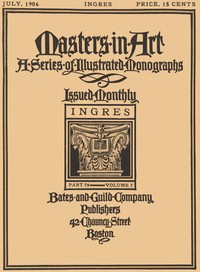
Masters in Art, Part 79, Volume 7, July, 1906: Ingres: A Series of Illustrated Monographs
Written by Unknown author
Chaptra reads alongside you — AI insights, chapter breakdowns and reader discussions for every book. Join free
About this book
Reading guide
Themes, characters and key ideas in Masters in Art, Part 79, Volume 7, July, 1906: Ingres: A Series of Illustrated Monographs, written by Chaptra AI.
- about 5 hours
- advanced
- Informative
- Scholarly
- Analytical
This monograph, "Masters in Art, Part 79, Volume 7, July, 1906: Ingres," provides a comprehensive early 20th-century examination of the life and work of the French Neoclassical painter Jean-Auguste-Dominique Ingres. It combines biographical details with critical analysis of his artistic output, positioning him within the context of 19th-century French art. As part of a larger series, it aims to educate and inform readers about master artists through accessible text and numerous illustrations of his seminal works. The volume serves as both an introduction to Ingres and a historical document reflecting early 20th-century art criticism and scholarship.
“"Ingres was above all else a draughtsman, and in his unwavering devotion to line he remained throughout his long career the most uncompromising champion of the classical tradition."”
Key themes
- The Enduring Power of Classicism
- The monograph extensively explores Ingres's unwavering commitment to classical ideals: precision of line, formal harmony, ideal beauty, and the emulation of ancient Greek and Roman art and the High Renaissance. This theme is presented as the bedrock of his artistic philosophy and the guiding principle throughout his career, often in contrast to contemporary artistic movements.
- Academicism vs. Romanticism
- This theme highlights the significant artistic debate of Ingres's era. The monograph positions Ingres as the champion of academic tradition and classicism, often implicitly or explicitly contrasting his methodical, rational approach with the emotional, dynamic, and often chaotic tendencies of Romanticism. It examines how Ingres's work was perceived and judged within this polarized artistic landscape.
- Artistic Legacy and Influence
- The monograph concludes by assessing Ingres's lasting impact on subsequent generations of artists and his place in art history. It discusses how his meticulous technique and dedication to line influenced figures even outside strict academic circles, and how his work continued to be a touchstone for discussions about drawing, form, and the classical ideal long after his death.
Worth discussing
How does this 1906 monograph reflect the prevailing art historical methodologies and critical values of its time?
Chapter-by-chapter breakdowns, character arcs and the full thematic analysis come with a free account.
Discussions
No one has started one yet
Questions this book opens up
No discussions yet
Be the first to start a discussion about this book!
Sign up to start the discussionReviews
No reviews yet
Be the first to review this book!