
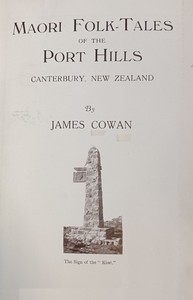
Maori folk-tales of the Port Hills, Canterbury, New Zealand
Written by James Cowan
Chaptra reads alongside you — AI insights, chapter breakdowns and reader discussions for every book. Join free
About this book
Reading guide
Themes, characters and key ideas in Maori folk-tales of the Port Hills, Canterbury, New Zealand, written by Chaptra AI.
- about 7 hours
- intermediate
- mythical
- reverent
- historical
James Cowan's "Maori folk-tales of the Port Hills, Canterbury, New Zealand" is a vital collection that preserves indigenous narratives intrinsically linked to the specific landscape of the Port Hills. The book compiles a rich tapestry of traditional Māori stories, legends, and historical accounts, offering insights into the spiritual beliefs, cultural practices, and ancestral knowledge of the local iwi. It serves as a significant ethnographic record, illuminating the deep connection between Māori people and their environment, where every hill, river, and rock holds a story and a spiritual significance. Through these tales, Cowan endeavors to capture the essence of an oral tradition, making it accessible to a wider audience while documenting a crucial part of New Zealand's cultural heritage.
“"For every hill and valley, every river and lake, holds within its contours the memory of our ancestors and the echoes of their deeds."”
Key themes
- Connection to Whenua (Land)
- The land (whenua) is not merely property but a living entity, an ancestor, and the source of identity and sustenance. The tales imbue every geographical feature of the Port Hills with historical and spiritual significance, linking the physical landscape directly to ancestral deeds, spiritual beings, and tribal identity. This theme explores the profound reciprocal relationship between Māori people and their environment.
- Ancestral Heritage and Identity (Tīpuna)
- The tales are a direct link to the tīpuna (ancestors), whose actions, wisdom, and sacrifices shape the present and future. Identity is deeply rooted in whakapapa (genealogy) and the stories of those who came before. These narratives serve to validate lineage, transmit cultural knowledge, and reinforce tribal unity and pride.
- Spiritual Worldview (Mana, Tapu, Atua)
- The collection deeply embeds the Māori spiritual worldview, where the physical and spiritual realms are intertwined. Concepts like mana (prestige, spiritual power), tapu (sacredness, prohibition), and the presence of atua (gods/ancestral spirits) are central. The stories illustrate how these forces govern behavior, explain the inexplicable, and shape the destiny of individuals and communities.
Worth discussing
How does the landscape of the Port Hills act as a character or a central element in these tales?
Chapter-by-chapter breakdowns, character arcs and the full thematic analysis come with a free account.
Discussions
No one has started one yet
Questions this book opens up
No discussions yet
Be the first to start a discussion about this book!
Sign up to start the discussionReviews
No reviews yet
Be the first to review this book!