
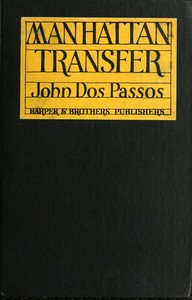
Manhattan Transfer
Written by John Dos Passos
Chaptra reads alongside you — AI insights, chapter breakdowns and reader discussions for every book. Join free
About this book
Reading guide
Themes, characters and key ideas in Manhattan Transfer, written by Chaptra AI.
- about 8 hours
- advanced
- bleak
- fragmented
- vibrant
John Dos Passos's "Manhattan Transfer" is a groundbreaking modernist novel that offers a kaleidoscopic view of New York City in the early 20th century. Through a fragmented, non-linear narrative, it interweaves the lives of dozens of characters, from ambitious artists and financiers to struggling immigrants and working-class citizens. The novel vividly portrays the city as a vibrant yet dehumanizing force, exploring themes of urban alienation, the elusive American Dream, and the relentless pace of modern life. Its innovative use of cinematic techniques, newspaper headlines, and stream-of-consciousness snippets creates a powerful, impressionistic tapestry of urban experience, capturing the energy and despair of a metropolis in constant flux.
“Manhattan Transfer! The ferry boat is a dream. People getting on, people getting off. They all look tired, white, with eyes that are afraid to meet yours.”
Key themes
- Urban Alienation and Dehumanization
- The novel profoundly explores how the immense scale, anonymity, and relentless pace of New York City lead to a deep sense of isolation and fragmentation among its inhabitants. Individuals are often reduced to cogs in a vast, indifferent machine, struggling to form meaningful connections or maintain a coherent sense of self amidst the urban chaos.
- The Corrupted American Dream
- Dos Passos critiques the traditional notion of the American Dream, showing how the promise of success, wealth, and upward mobility in the urban landscape often leads to moral compromise, spiritual emptiness, or outright failure. Material gain rarely equates to happiness or fulfillment, and the pursuit of it can be destructive.
- Modernity and Disillusionment
- The novel captures the exhilarating yet ultimately disillusioning experience of early 20th-century modernity. The rapid technological advancements, social changes, and frenetic pace of urban life bring progress but also a sense of fragmentation, moral decay, and a loss of traditional values, leading characters to question meaning and purpose.
Worth discussing
How does Dos Passos's experimental narrative structure (collage, montage, shifting perspectives) contribute to the novel's themes and overall impact?
Chapter-by-chapter breakdowns, character arcs and the full thematic analysis come with a free account.
Discussions
No one has started one yet
Questions this book opens up
No discussions yet
Be the first to start a discussion about this book!
Sign up to start the discussionReviews
No reviews yet
Be the first to review this book!