
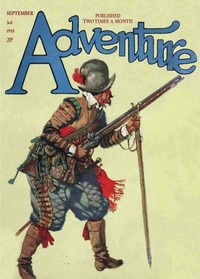
Making Good for Muley
Written by W. C. (Wilbur C.) Tuttle
Chaptra reads alongside you — AI insights, chapter breakdowns and reader discussions for every book. Join free
About this book
Reading guide
Themes, characters and key ideas in Making Good for Muley, written by Chaptra AI.
- about 5 hours
- intermediate
- adventurous
- redemptive
- tense
W. C. Tuttle's "Making Good for Muley" is a classic pulp Western chronicling the journey of Muley Kincaid, a misunderstood ranch hand with a shadowed past, as he strives to clear his name and earn the respect of a skeptical frontier town. Accused of cattle rustling and initially an outcast, Muley finds an opportunity for redemption when a ruthless outlaw gang threatens the very community that distrusts him. Through a series of daring actions, unwavering loyalty, and a keen sense of justice, Muley proves his true character, ultimately confronting his accusers and the real villains, thereby making good on his inherent, though hidden, integrity.
“A man's worth ain't in what folks say about him, but in what he does when no one's lookin'.”
Key themes
- Redemption and Second Chances
- This theme is central to Muley Kincaid's entire journey. It explores the idea that individuals, regardless of past mistakes or reputations, can earn a second chance through honorable actions and moral integrity. The frontier setting often provides this opportunity for a fresh start.
- Justice and Lawlessness
- The conflict between formal law (the often-ineffective sheriff) and a more personal, frontier-style justice (Muley's actions) is a key theme. It examines how justice is achieved in a challenging environment where law enforcement can be weak or compromised, and how individuals must often take matters into their own hands.
- Community and Belonging
- The story explores what it means to belong to a community, especially for an outsider. It highlights the challenges of prejudice and suspicion, and how shared adversity can forge bonds and redefine who is considered 'one of us.'
Worth discussing
How does Muley Kincaid challenge the initial perceptions of the townspeople? What does this say about prejudice and judgment in a frontier setting?
Chapter-by-chapter breakdowns, character arcs and the full thematic analysis come with a free account.
Discussions
No one has started one yet
Questions this book opens up
No discussions yet
Be the first to start a discussion about this book!
Sign up to start the discussionReviews
No reviews yet
Be the first to review this book!