
The AI reading companion for people who take books seriously
AI insights, chapter breakdowns, community discussions — all in one place.
Magic Shadows: The Story of the Origin of Motion Pictures
About this book
More by Martin Quigley
Browse all books by this authorExplore Motion pictures Books
Discover more Motion pictures literature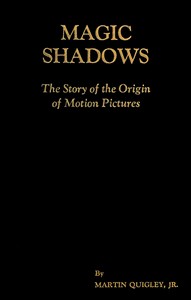
Click "Read now" to open in our Reader with AI features.
Community Discussions
Join the conversation about this book
Discussions
0 discussions
No discussions yet
Be the first to start a discussion about this book!
Sign up to start the discussionAI-Powered Insights
A clearer way to understand Magic Shadows: The Story of the Origin of Motion Pictures through themes, characters, and key ideas
This reading guide highlights what stands out in Magic Shadows: The Story of the Origin of Motion Pictures through 4 core themes, 6 character profiles. It is meant to help readers decide whether the book fits their taste and deepen the reading once they begin.
About this book
A quick AI guide to “Magic Shadows: The Story of the Origin of Motion Pictures”
Get the shape of the book before you commit: what it is about, what mood it carries, and what ideas readers tend to stay with afterward.
What the book is doing
Martin Quigley's "Magic Shadows" meticulously chronicles the intricate and often contested journey from ancient optical illusions to the birth of motion pictures. The book delves into the scientific curiosity and technological ingenuity of numerous individuals across generations, tracing the lineage of ideas and inventions that culminated in the cinematic experience. It highlights the pivotal roles of precursors like magic lanterns, early photographic experiments, and the race to capture and project moving images, ultimately painting a comprehensive picture of cinema's complex origins. Quigley emphasizes the global contributions and the iterative nature of discovery, revealing how diverse scientific and artistic efforts converged to create a revolutionary new medium.
Key Themes
Innovation and Discovery
The central theme, exploring the human drive to understand, capture, and manipulate reality through technology. Quigley details the iterative process of invention, where each discovery builds on previous knowledge, often through trial, error, and serendipity. It highlights the curiosity that pushes boundaries and the ingenuity in solving complex technical problems.
Collaboration vs. Competition
The book vividly portrays the complex interplay between inventors who collaborated, shared ideas, and built upon each other's work, and those who engaged in intense competition, patent disputes, and a race to be 'first.' It illustrates how both forces were crucial in accelerating the development of cinema.
“The magic of shadows, once confined to fleeting moments and individual wonder, was destined to become a shared spectacle, illuminating the world.”
How does Quigley's detailed account challenge or reinforce common narratives about the invention of cinema?
See chapter-by-chapter takeaways, deeper character arcs, and a fuller literary analysis built around this book.
Unlock full AI analysis for “Magic Shadows: The Story of the Origin of Motion Pictures”
Chapter breakdowns, character deep-dives, and thematic analysis — all in one place.
Reader Reviews
See what others are saying
Reviews
Overall Rating
Based on community ratings
No reviews yet
Be the first to review this book!
Readers Also Enjoyed
Discover more books similar to Magic Shadows: The Story of the Origin of Motion Pictures