
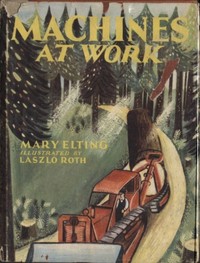
Machines at Work
Written by Mary Elting
Chaptra reads alongside you — AI insights, chapter breakdowns and reader discussions for every book. Join free
About this book
Reading guide
Themes, characters and key ideas in Machines at Work, written by Chaptra AI.
- about 2 hours
- beginner
- informative
- educational
- uplifting
''Machines at Work'' by Mary Elting, an illustrated children's book from the early 1950s, offers an engaging introduction to various industrial machines. The book systematically explores how different machines, from farm tractors to construction cranes, enhance human labor by making difficult tasks easier and quicker across diverse industries like agriculture and building. Through accessible language and vivid illustrations, often guided by characters like farmer Dan and construction worker Charlie, it explains their functions and the advancements they represent. Ultimately, the publication celebrates both the ingenious machinery and the creative human minds behind their invention, underscoring the vital partnership between people and technology.
“Imagine a world where every big job was done by hand! Thankfully, human minds dreamt up machines!”
Key themes
- Human Ingenuity and Innovation
- This theme celebrates the human capacity for invention and problem-solving. The book highlights how machines are products of creative minds seeking to overcome physical limitations and improve efficiency, emphasizing the intellectual effort and imaginative spirit behind technological advancement.
- Interdependence of Humans and Technology
- This theme emphasizes that while machines are powerful, they are fundamentally tools that require human intellect, guidance, and operation. The book celebrates machines but consistently places humans at the center as inventors, operators, and beneficiaries, highlighting a symbiotic relationship rather than one of replacement or subservience.
- Efficiency and Progress
- The book consistently demonstrates how machines make tasks 'easier and quicker,' leading to greater productivity and societal advancement. This theme explores the transformative power of technology in increasing output, reducing manual effort, and accelerating development across various industries, thereby contributing to overall societal progress.
Worth discussing
How do machines help people in their daily lives?
Chapter-by-chapter breakdowns, character arcs and the full thematic analysis come with a free account.
Discussions
No one has started one yet
Questions this book opens up
No discussions yet
Be the first to start a discussion about this book!
Sign up to start the discussionReviews
No reviews yet
Be the first to review this book!