
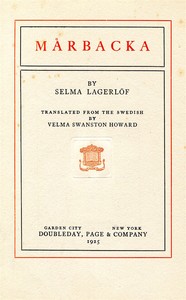
Mårbacka
Written by Selma Lagerlöf
Chaptra reads alongside you — AI insights, chapter breakdowns and reader discussions for every book. Join free
About this book
Reading guide
Themes, characters and key ideas in Mårbacka, written by Chaptra AI.
- about 10 hours
- intermediate
- nostalgic
- reflective
- evocative
Selma Lagerlöf's "Mårbacka" is an evocative autobiographical novel that chronicles the author's childhood at her family estate in rural Sweden during the late 19th century. Through the eyes of young Selma, the narrative presents a series of vignettes detailing daily life, family dynamics, and the formative experiences that shaped her early years. The book vividly contrasts the stern discipline of the nursemaid Back-Kaisa with the comforting warmth of her storytelling grandmother and the playful affection of her father. It is a deeply reflective exploration of childhood innocence, the power of memory, and the enduring influence of home and family, infused with a lyrical and nostalgic tone.
“The world of Mårbacka, as seen through a child's eyes, was a tapestry of wonder and quiet fear.”
Key themes
- Childhood and Innocence
- This theme is central, exploring the unique perspective of a child, their fears, joys, and the often-blurred lines between reality and imagination. Lagerlöf delves into the formation of a child's worldview, shaped by their immediate environment and the adults around them, highlighting the vulnerability and boundless curiosity of early years.
- Memory and Nostalgia
- The entire book is framed as a recollection, an adult Selma looking back at her childhood. This theme explores how memories are formed, preserved, and often idealized, and how they contribute to one's identity. It delves into the bittersweet nature of nostalgia, a longing for a past that is both cherished and irrevocably lost.
- The Power of Storytelling and Imagination
- This theme highlights the crucial role of stories, particularly those told by the Grandmother, in shaping the children's inner worlds. Storytelling provides comfort, stimulates imagination, teaches moral lessons, and offers an escape from the mundane or frightening aspects of reality. It's also a meta-commentary on Lagerlöf's own craft.
Worth discussing
How does Lagerlöf use memory and nostalgia to shape the narrative, and does this idealize the past?
Chapter-by-chapter breakdowns, character arcs and the full thematic analysis come with a free account.
Discussions
No one has started one yet
Questions this book opens up
No discussions yet
Be the first to start a discussion about this book!
Sign up to start the discussionReviews
No reviews yet
Be the first to review this book!