
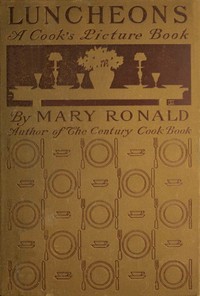
Luncheons: A Cook's Picture Book
Written by Mary Ronald
Chaptra reads alongside you — AI insights, chapter breakdowns and reader discussions for every book. Join free
About this book
Reading guide
Themes, characters and key ideas in Luncheons: A Cook's Picture Book, written by Chaptra AI.
- about 4 hours
- intermediate
- instructive
- elegant
- practical
Mary Ronald's "Luncheons: A Cook's Picture Book" is an early 20th-century instructional cookbook designed as a practical supplement to "The Century Cook Book." It meticulously guides housekeepers through the art of preparing diverse luncheon meals, ranging from informal gatherings to elaborate affairs. Emphasizing the critical role of aesthetics, the book provides detailed advice on menu selection, table settings, guest arrangement, and the visual presentation of dishes through garnishing and dishing techniques. Beyond just recipes, it offers a window into the culinary culture and social expectations of its era, blending practicality with a strong focus on elegance in domestic entertaining.
“"The luncheon, though often informal, demands no less attention to grace and appeal than the most elaborate dinner."”
Key themes
- Domesticity and Homemaking
- This theme is central, portraying the home as a sphere of influence and the housekeeper as a central figure responsible for the comfort and social standing of the family. The book equips women with the skills necessary to manage a household with grace and efficiency, particularly in the realm of entertaining.
- Culinary Etiquette and Presentation
- The book places significant emphasis on the aesthetics of food and dining, illustrating that the experience of a meal extends far beyond taste. Proper etiquette, meticulous table settings, and artful garnishing are presented as crucial components of gracious entertaining, reflecting societal expectations of refinement and taste.
- Practicality and Efficiency in the Kitchen
- Despite the emphasis on elegance, the book remains a 'practical cook's guide.' It aims to provide efficient and effective methods for preparing meals, recognizing the demands on a housekeeper's time and resources. The focus on specific recipes and techniques highlights a pragmatic approach to culinary tasks.
Worth discussing
How does 'Luncheons' reflect the social expectations and gender roles of early 20th-century women?
Chapter-by-chapter breakdowns, character arcs and the full thematic analysis come with a free account.
Discussions
No one has started one yet
Questions this book opens up
No discussions yet
Be the first to start a discussion about this book!
Sign up to start the discussionReviews
No reviews yet
Be the first to review this book!