
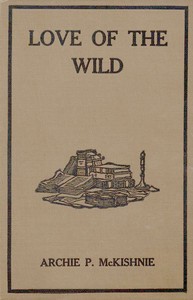
Love of the Wild
Written by Archie P. McKishnie
Chaptra reads alongside you — AI insights, chapter breakdowns and reader discussions for every book. Join free
About this book
Read it with a club
Chaptra's fiction clubs — small groups reading the same books and talking as they go.


CraxMe Readers Book Club
Fiction
- 385 members
- 227 discussions
- Started December 2025
Welcome to the Readers Book Club. This is an informal group for like-minded people, where you can discuss books, share and recommend, track your reading progress, and lots more. Discuss Books — all about books. Discuss a particular book or genre, share your favourite quotes. Book Reviews — loved a book and highly recommend it? Or was it just average? Share your review and discuss with fellow readers. (May contain spoilers.) Group Reads — what is a book club without a group read! Buddy Reads — planning to read a book and looking for someone to read it with? Post in the Buddy Read request thread, find a reading buddy, and start discussing.
Read Love of the Wild alongside people who are reading it too.
Also here: Doorstops, First Lines Club
Chaptra Prime — paid clubs, every club feature, and unlimited reading support, for $5 a month or $60 once.
See PrimeReading guide
Themes, characters and key ideas in Love of the Wild, written by Chaptra AI.
- about 8 hours
- intermediate
- Reflective
- Melancholy
- Nature-centric
Archie P. McKishnie's "Love of the Wild" is an early 20th-century novel centered on Boy McTavish, a young man whose identity is intrinsically linked to the untamed wilderness of his home. As the encroaching forces of civilization, symbolized by a new schoolhouse and an authoritarian figure, threaten his natural world, Boy grapples with profound internal conflicts. The narrative explores his deep connection to wildlife, his coming-of-age through encounters with life and death, and his evolving relationships amidst a changing environment. Ultimately, the story is a poignant exploration of preservation, identity, and the struggle to reconcile the wild heart with the demands of a modernizing world.
“The forest breathes, and I breathe with it. They call it wild, but it is home.”
Key themes
- Man vs. Nature / Civilization vs. Wilderness
- This is the central thematic conflict of the novel, exploring the inherent tension between humanity's drive to conquer and 'improve' nature and the intrinsic value and right to existence of the untamed wilderness. It questions the definition of 'progress' and the cost of civilization on the natural world and the human spirit connected to it.
- Coming-of-Age and Identity
- The novel traces Boy McTavish's journey from a youthful, almost instinctual connection to nature to a more complex understanding of himself and his place in a world undergoing significant change. His identity is challenged and forged through his encounters with loss, love, and conflict, forcing him to define who he is in relation to both the wild and human society.
- Loss and Preservation
- Underlying the primary conflict is a strong sense of impending loss – the loss of pristine wilderness, traditional ways of life, and an older, simpler existence. The novel explores the emotional and practical implications of this loss and the imperative to preserve what is valuable before it is irrevocably gone.
Worth discussing
How does Boy McTavish's connection to nature define his identity, and how does this identity clash with the encroaching civilization?
Chapter-by-chapter breakdowns, character arcs and the full thematic analysis come with a free account.
Discussions
No one has started one yet
Questions this book opens up
No discussions yet
Be the first to start a discussion about this book!
Sign up to start the discussionReviews
No reviews yet
Be the first to review this book!