
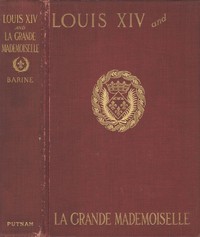
Louis XIV and La Grande Mademoiselle, 1652-1693
Written by Arvède Barine
Chaptra reads alongside you — AI insights, chapter breakdowns and reader discussions for every book. Join free
About this book
Reading guide
Themes, characters and key ideas in Louis XIV and La Grande Mademoiselle, 1652-1693, written by Chaptra AI.
- about 12 hours
- advanced
- historical
- political
- dramatic
Arvède Barine's "Louis XIV and La Grande Mademoiselle, 1652-1693" is an early 20th-century historical account that meticulously examines the complex interplay of personal ambition and political power in 17th-century France. The book centers on La Grande Mademoiselle, a pivotal figure navigating the turbulent aftermath of the Fronde, and her challenging relationship with Louis XIV's burgeoning absolute monarchy. It chronicles her return from exile, her struggle to adapt to a vastly changed court environment, and the emotional turmoil stemming from her past glories clashing with present realities. Through her experiences, Barine offers a window into the societal expectations for noblewomen, the intricate dance of court politics, and the consolidation of royal power under the Sun King. Ultimately, the work provides a detailed portrait of a remarkable woman against the backdrop of one of France's most transformative periods.
“"Her return from exile was not merely a journey home, but an arduous passage into a world irrevocably altered by the King's will."”
Key themes
- Power and Absolute Monarchy
- This theme explores the nature of power, its consolidation under Louis XIV, and its effects on individuals and society. The book details how Louis XIV systematically dismantled potential challenges to his authority, transforming the French nobility from independent feudal lords into courtiers dependent on royal favor. It examines the mechanisms of absolute rule and the ideological underpinnings that justified it.
- Ambition and Disillusionment
- This theme focuses on La Grande Mademoiselle's personal aspirations—for influence, a suitable marriage, and a significant role—and the repeated frustration of these ambitions by the shifting political landscape and Louis XIV's policies. It explores the psychological toll of unfulfilled desires and the process of coming to terms with diminished expectations.
- Gender and Court Politics
- The book highlights the specific roles, limitations, and unique forms of power available to women of high status within the patriarchal structure of the 17th-century French court. It examines how La Grande Mademoiselle, despite her wealth and royal lineage, was ultimately constrained by gendered expectations and the dominance of male authority.
Worth discussing
How does Barine portray the struggle between individual ambition and the demands of absolute monarchy through La Grande Mademoiselle's experiences?
Chapter-by-chapter breakdowns, character arcs and the full thematic analysis come with a free account.
Discussions
No one has started one yet
Questions this book opens up
No discussions yet
Be the first to start a discussion about this book!
Sign up to start the discussionReviews
No reviews yet
Be the first to review this book!