
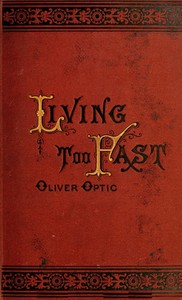
Living Too Fast; Or, The Confessions of a Bank Officer
Written by Oliver Optic
Chaptra reads alongside you — AI insights, chapter breakdowns and reader discussions for every book. Join free
About this book
Reading guide
Themes, characters and key ideas in Living Too Fast; Or, The Confessions of a Bank Officer, written by Chaptra AI.
- about 8 hours
- intermediate
- cautionary
- moralistic
- somber
Oliver Optic's "Living Too Fast; Or, The Confessions of a Bank Officer" is a cautionary tale from the late 19th century, following Paley Glasswood, a young man whose ambition and desire for social standing lead him down a path of moral compromise. Initially competing for a bank position, Paley's conscience is tested when his uncle manipulates circumstances to disqualify his rival, Tom Flynn. Despite his initial moral qualms, Paley embraces his new role, only to find himself entangled in a web of deceit driven by financial pressures and a burgeoning infatuation with Miss Lilian Oliphant. The novel meticulously charts Paley's descent into dishonesty as he struggles to maintain appearances, offering a poignant commentary on the ethical challenges faced by aspiring businessmen of the era and the corrosive power of unchecked ambition.
“"The path of ambition, once trod, demands sacrifices of conscience few are truly prepared to make."”
Key themes
- Ambition and Moral Compromise
- The central theme, exploring how Paley Glasswood's desire for success and social elevation leads him to incrementally sacrifice his integrity. The novel meticulously details the psychological process of rationalizing unethical choices, demonstrating how ambition, when unchecked by a strong moral compass, can become a destructive force, eroding personal values in pursuit of external validation.
- Appearance Versus Reality
- This theme examines the profound disconnect between the outward facade Paley strives to maintain and the underlying truth of his financial situation and moral standing. The novel highlights the societal pressures of the late 19th century to uphold a respectable image, often at great personal cost, and the corrosive effects of living a lie.
- Conscience and Guilt
- Throughout Paley's moral descent, his 'nagging conscience' serves as a consistent inner voice, albeit one he repeatedly ignores. This theme explores the psychological toll of unethical actions, illustrating how guilt, though suppressed, continues to plague the individual and ultimately contributes to their downfall or the desire for confession.
Worth discussing
How does Paley Glasswood's initial sense of integrity contribute to, or contradict, his eventual moral decline?
Chapter-by-chapter breakdowns, character arcs and the full thematic analysis come with a free account.
Discussions
No one has started one yet
Questions this book opens up
No discussions yet
Be the first to start a discussion about this book!
Sign up to start the discussionReviews
No reviews yet
Be the first to review this book!