
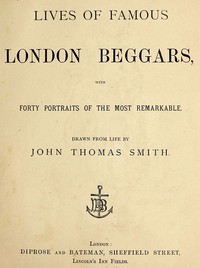
Lives of Famous London Beggars: With Forty Portraits of the Most Remarkable.
Written by John Thomas Smith
Chaptra reads alongside you — AI insights, chapter breakdowns and reader discussions for every book. Join free
About this book
Reading guide
Themes, characters and key ideas in Lives of Famous London Beggars: With Forty Portraits of the Most Remarkable., written by Chaptra AI.
- about 8 hours
- intermediate
- observational
- historical
- melancholic
John Thomas Smith's "Lives of Famous London Beggars" offers a fascinating and unique glimpse into the underbelly of early 19th-century London, documenting the lives of various mendicants, street characters, and eccentrics. Through a series of biographical sketches, often accompanied by engraved portraits, Smith meticulously records the ingenious methods, personal histories (both real and fabricated), and distinct personalities of those living on the margins of society. The book serves as an invaluable historical and ethnographic record, capturing the diverse strategies of survival and the peculiar social landscape of a bustling metropolitan city. It explores themes of poverty, social perception, and human resilience, presenting a vivid mosaic of urban life that transcends mere observation to offer a form of sympathetic yet critical social commentary.
“London, a city of contrasts, where untold wealth brushes shoulders with the most abject poverty, and where ingenuity thrives even amidst despair.”
Key themes
- Poverty and Survival
- This is the overarching theme, exploring the harsh realities of destitution in early 19th-century London. The book meticulously details the various strategies employed by beggars to survive, from feigned ailments and elaborate stories to musical performances and direct appeals. It showcases the ingenuity and desperation born out of extreme lack, highlighting a society with vast disparities in wealth and a minimal social safety net.
- Social Observation and Documentation
- Smith's primary purpose is to document a specific, often overlooked, segment of London society. The book acts as an early form of urban ethnography, meticulously recording the appearance, habits, and 'lives' of beggars. It's a testament to the power of direct observation in understanding social phenomena, providing a rich historical record of a transient population.
- Performance and Deception
- Many of the beggars profiled are masters of performance and deception, crafting elaborate personas and narratives to elicit sympathy and alms. This theme explores the theatricality of survival, where individuals must become actors, manipulating public perception to meet their basic needs. It delves into the psychology of both the performer and the audience.
Worth discussing
How does Smith's portrayal of beggars challenge or reinforce common societal stereotypes of poverty and the poor in early 19th-century London?
Chapter-by-chapter breakdowns, character arcs and the full thematic analysis come with a free account.
Discussions
No one has started one yet
Questions this book opens up
No discussions yet
Be the first to start a discussion about this book!
Sign up to start the discussionReviews
No reviews yet
Be the first to review this book!