
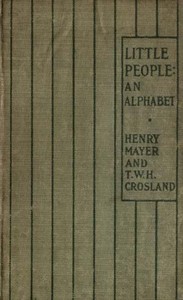
Little people : $b an alphabet
Written by T. W. H. (Thomas William Hodgson) Crosland
Chaptra reads alongside you — AI insights, chapter breakdowns and reader discussions for every book. Join free
About this book
Reading guide
Themes, characters and key ideas in Little people : $b an alphabet, written by Chaptra AI.
- about 1 hours
- beginner
- educational
- whimsical
- charming
T. W. H. Crosland's "Little People: An Alphabet" is an early 20th-century children's book designed to introduce young readers to the alphabet through whimsical verses and colorful illustrations by Henry Mayer. As part of The Dumpy Books for Children series, it blends education with entertainment, presenting a different character representing a specific nationality or culture for each letter from A to Z. Through playful rhymes, children encounter diverse figures such as an Arab with a beautiful horse and a cheerful Japanese child, each depicted with unique, often stereotypical, traits. The book serves as an early attempt to foster global awareness, aiming to make learning about the world's cultures an engaging and rhythmic experience for its young audience.
“An Arab with a beautiful horse...”
Key themes
- Education & Alphabetical Learning
- At its core, the book is an educational tool designed to teach the alphabet to young children. The cultural representations serve as engaging and memorable devices to associate letters with words and concepts, making the learning process enjoyable and interactive.
- Early 20th-Century Cultural Representation
- This theme explores how different cultures were perceived and presented to children in the early 20th century. It reveals the prevalent societal biases, simplifications, and stereotypes of the era, which often reduced complex identities to singular, easily recognizable, and sometimes exoticized traits.
- Cultural Introduction & Diversity
- The book's primary theme is to introduce young children to the concept of cultural diversity by presenting different nationalities and their associated traits for each letter of the alphabet. It aims to broaden a child's worldview beyond their immediate surroundings.
Worth discussing
How does 'Little People: An Alphabet' reflect the attitudes towards cultural diversity in the early 20th century?
Chapter-by-chapter breakdowns, character arcs and the full thematic analysis come with a free account.
Discussions
No one has started one yet
Questions this book opens up
No discussions yet
Be the first to start a discussion about this book!
Sign up to start the discussionReviews
No reviews yet
Be the first to review this book!