
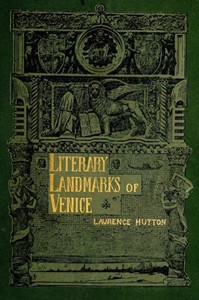
Literary Landmarks of Venice
Written by Laurence Hutton
Chaptra reads alongside you — AI insights, chapter breakdowns and reader discussions for every book. Join free
About this book
Reading guide
Themes, characters and key ideas in Literary Landmarks of Venice, written by Chaptra AI.
- about 12 hours
- intermediate
- informative
- evocative
- historical
Laurence Hutton's "Literary Landmarks of Venice" serves as an erudite and charming guide to the illustrious city, tracing the footsteps of countless literary figures who have lived in, visited, or been inspired by its unique beauty and history. The book meticulously catalogs the specific locations—palaces, canals, churches, and cafes—associated with writers from various eras, weaving historical anecdotes with biographical details to bring their Venetian experiences to life. It's a journey through both geography and literary history, offering readers a deep appreciation for the symbiotic relationship between Venice and the written word. Hutton's work is not merely a travelogue but a cultural excavation, revealing how the city has shaped and been shaped by some of the world's greatest minds.
“Venice, that incomparable city, has ever been a magnet for the poetic soul, drawing forth verses as naturally as its canals draw the tides.”
Key themes
- The Allure and Inspiration of Venice
- This is the central theme, exploring why Venice has consistently captivated and inspired writers across centuries and genres. Hutton demonstrates how the city's unique blend of beauty, decay, history, and romance acts as a powerful muse, influencing narrative, imagery, and mood in literary works.
- Place and Artistic Creation
- This theme examines the profound and often transformative relationship between a physical environment and the creative output of artists. Hutton shows how Venice is not merely a backdrop but an active participant in shaping the ideas, emotions, and specific details within literary works, suggesting a symbiotic relationship where the place influences the art, and the art, in turn, shapes our perception of the place.
- Historical Memory and Literary Legacy
- Hutton delves into how Venice embodies a rich tapestry of historical memory, with each landmark holding stories of past eras and the individuals who inhabited them. The book explores how literary works contribute to this historical memory, preserving moments, perspectives, and emotional responses to the city across generations, creating a cumulative legacy that continues to inform contemporary understanding.
Worth discussing
How does Hutton's approach to mapping literary history differ from a traditional biography or a straightforward travel guide?
Chapter-by-chapter breakdowns, character arcs and the full thematic analysis come with a free account.
Discussions
No one has started one yet
Questions this book opens up
No discussions yet
Be the first to start a discussion about this book!
Sign up to start the discussionReviews
No reviews yet
Be the first to review this book!