
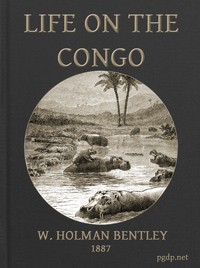
Life on the Congo
Written by W. Holman (William Holman) Bentley
Chaptra reads alongside you — AI insights, chapter breakdowns and reader discussions for every book. Join free
About this book
Reading guide
Themes, characters and key ideas in Life on the Congo, written by Chaptra AI.
- about 10 hours
- advanced
- informative
- historical
- didactic
W. Holman Bentley's "Life on the Congo" offers a late 19th-century historical account of the Congo River region, meticulously detailing its exploration, geography, and the diverse cultures encountered. The book serves as a primary source, documenting the interplay between indigenous beliefs and customs with the burgeoning European presence, particularly through missionary work and colonial expansion. It traces the historical progression from early explorations by figures like Diogo Cam and Dr. Livingstone to the establishment of trade routes and missions. Ultimately, Bentley's work provides a window into the complex societal and political transformations occurring in the Congo basin, colored by the author's missionary perspective.
“The Congo, that mighty artery of Central Africa, has ever drawn the eye of the explorer and the heart of the missionary.”
Key themes
- Missionary Work and Religious Conversion
- Central to Bentley's narrative, this theme explores the efforts of Christian missionaries to spread their faith, establish churches, and provide education and healthcare. It delves into the methods used, the challenges faced (language, local beliefs, disease), and the perceived successes and failures of conversion efforts, all from the missionary's perspective.
- Colonialism and Imperialism
- The book serves as a firsthand account during the peak of the 'Scramble for Africa,' implicitly and explicitly detailing the mechanisms and justifications of European expansion. It covers the political shifts, economic interests (resources, trade), and the establishment of European control over the Congo, often framed as a civilizing mission.
- Cultural Encounter and Conflict
- The book vividly portrays the clash and occasional synthesis of European and indigenous Congolese cultures. Bentley describes local customs, social structures, religious practices, and daily life, often contrasting them with European norms. This theme highlights the misunderstandings, adaptations, and conflicts that arose from these interactions.
Worth discussing
How does Bentley's account reflect the prevailing attitudes towards African cultures and peoples in the late 19th century?
Chapter-by-chapter breakdowns, character arcs and the full thematic analysis come with a free account.
Discussions
No one has started one yet
Questions this book opens up
No discussions yet
Be the first to start a discussion about this book!
Sign up to start the discussionReviews
No reviews yet
Be the first to review this book!