
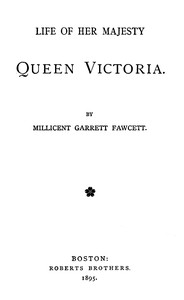
Life of Her Majesty Queen Victoria
Written by Millicent Garrett Fawcett
Chaptra reads alongside you — AI insights, chapter breakdowns and reader discussions for every book. Join free
About this book
Reading guide
Themes, characters and key ideas in Life of Her Majesty Queen Victoria, written by Chaptra AI.
- about 8 hours
- intermediate
- Informative
- Historical
- Admiring
Dame Millicent Garrett Fawcett's "Life of Her Majesty Queen Victoria" offers an admiring yet analytical historical account of Queen Victoria's life and reign, written from a late 19th-century perspective. The biography meticulously traces Victoria's journey from a sheltered childhood to becoming a revered monarch, emphasizing the formative influences on her character and her pivotal role in England's constitutional development. Fawcett deftly challenges prevailing biases against female sovereignty, using Victoria's successful reign as a powerful counter-argument to historical prejudices. The narrative details significant political and personal events, illustrating the complexities of Victoria's duties and her enduring contributions to the monarchy and national identity.
“To suggest that a woman's capacity for governance is inherently lesser than a man's is to wilfully ignore the annals of history, where queens have often demonstrated unparalleled sagacity and strength.”
Key themes
- Female Sovereignty and Leadership
- Fawcett explicitly addresses and refutes the historical biases against female rulers, using Queen Victoria's successful and long reign as primary evidence. The theme explores how Victoria, despite being a woman in a male-dominated political landscape, demonstrated exceptional leadership, wisdom, and strength, proving that gender is not a barrier to effective governance. Fawcett highlights Victoria's personal assertion of authority from her accession and her ability to command respect and loyalty.
- Constitutional Monarchy and Duty
- The book meticulously details how Queen Victoria understood and upheld her constitutional role, even as the power of the monarch evolved throughout her reign. It explores her interactions with prime ministers, her influence on political decisions, and her commitment to the principles of parliamentary democracy. The theme emphasizes Victoria's profound sense of duty to her country and her people, which guided her actions and decisions.
- The Private vs. Public Self
- Fawcett explores the constant tension between Victoria's personal life, emotions, and desires, and her public persona as Queen. From her early struggles for independence to her deep love for Albert and her profound grief after his death, the book illustrates how Victoria's private experiences significantly impacted her public role and perception. It reveals the human element behind the monarch, struggling with universal emotions while bearing the weight of an empire.
Worth discussing
How does Fawcett's background as a suffragist influence her portrayal of Queen Victoria, and does this enhance or detract from the biography's objectivity?
Chapter-by-chapter breakdowns, character arcs and the full thematic analysis come with a free account.
Discussions
No one has started one yet
Questions this book opens up
No discussions yet
Be the first to start a discussion about this book!
Sign up to start the discussionReviews
No reviews yet
Be the first to review this book!