
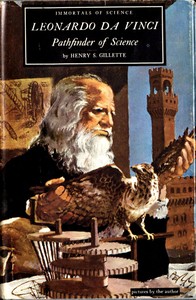
Leonardo da Vinci, Pathfinder of Science
Written by Henry S. Gillette
Chaptra reads alongside you — AI insights, chapter breakdowns and reader discussions for every book. Join free
About this book
Read it with a club
Small groups reading the same books and talking as they go.


News
- 3 members
- 1,813 discussions
- Active Sep 11
Read Leonardo da Vinci, Pathfinder of Science alongside people who are reading it too.
Also here: News Bulletin, Just Joking....
Chaptra Prime — paid clubs, every club feature, and unlimited reading support, for $5 a month or $60 once.
See PrimeReading guide
Themes, characters and key ideas in Leonardo da Vinci, Pathfinder of Science, written by Chaptra AI.
- about 8 hours
- intermediate
- inspirational
- informative
- historical
Henry S. Gillette's "Leonardo da Vinci, Pathfinder of Science" offers a compelling biographical exploration of the Renaissance polymath, focusing particularly on his often-overshadowed scientific and engineering contributions. Written in the early 1960s, the book transcends a mere artistic appreciation, positioning Leonardo as a visionary scientist whose inquiries and innovations laid groundwork for future discoveries. The narrative traces his intellectual awakening from a curious youth in Vinci, highlighting his innate observational skills and early fascination with nature that presaged his later breakthroughs. By detailing his multidisciplinary genius, Gillette argues for Leonardo's enduring legacy as a pioneer who seamlessly integrated art and science, leaving an indelible mark on human knowledge.
“"From an early age, Leonardo's mind was not merely observant, but relentlessly inquisitive, seeing not just what was, but what could be."”
Key themes
- The Interconnectedness of Art and Science
- This is the core theme of the book, arguing that for Leonardo, art and science were not separate disciplines but two sides of the same coin, mutually informing and enriching each other. His artistic precision was rooted in scientific observation, and his scientific inquiries were often expressed through detailed drawings and aesthetic compositions. The book demonstrates how his understanding of anatomy, perspective, light, and motion was crucial to both his paintings and his engineering designs.
- The Nature of Genius and Curiosity
- The book explores the origins and manifestations of Leonardo's extraordinary genius, positing that it stemmed from an insatiable and relentless curiosity. It showcases how his childhood fascination with nature evolved into a lifelong quest for understanding, driven by observation, experimentation, and an unwillingness to accept conventional wisdom. This theme highlights that genius is not just innate talent but also cultivated through persistent inquiry and an open mind.
- Innovation and Foresight
- Gillette positions Leonardo as a visionary whose ideas, inventions, and scientific hypotheses were often centuries ahead of their time. The book details how his designs for flying machines, submarines, and various mechanical devices, along with his theories on blood circulation, plate tectonics, and the nature of light, demonstrate an unparalleled foresight. This theme emphasizes the enduring impact of radical thinking and the potential for individuals to shape future technological and scientific progress.
Worth discussing
How does Gillette's portrayal of Leonardo challenge or confirm your preconceived notions of the Renaissance figure?
Chapter-by-chapter breakdowns, character arcs and the full thematic analysis come with a free account.
Discussions
No one has started one yet
Questions this book opens up
No discussions yet
Be the first to start a discussion about this book!
Sign up to start the discussionReviews
No reviews yet
Be the first to review this book!