
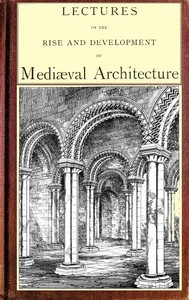
Lectures on the rise and development of medieval architecture; vol. 1
Written by George Gilbert Scott
Chaptra reads alongside you — AI insights, chapter breakdowns and reader discussions for every book. Join free
About this book
Reading guide
Themes, characters and key ideas in Lectures on the rise and development of medieval architecture; vol. 1, written by Chaptra AI.
- about 8 hours
- advanced
- scholarly
- informative
- analytical
Sir George Gilbert Scott's "Lectures on the Rise and Development of Mediæval Architecture; Vol. 1" is a seminal late 19th-century academic work derived from lectures delivered at the Royal Academy. This volume meticulously explores the evolution and profound significance of Gothic architecture, presenting it not merely as an artistic style but as a deep reflection of medieval socio-cultural conditions and Christian values. Scott's central thesis champions Gothic as a sophisticated and unique European achievement, tracing its emergence from Roman influences and highlighting the distinct contributions of French, English, and German traditions. Through historical context and architectural principles, the book lays the groundwork for a detailed examination of the aesthetic values, construction methods, and defining features of this pivotal architectural period, advocating for its dedicated study.
“The architecture of the Middle Ages, far from being a mere barbaric interlude, stands as a profound testament to human ingenuity and spiritual aspiration.”
Key themes
- Architectural Evolution and Innovation
- Scott meticulously traces the development of architectural forms from earlier Romanesque influences to the sophisticated emergence of Gothic. He emphasizes the continuous process of human ingenuity, structural problem-solving, and aesthetic adaptation that characterized medieval building, highlighting how each innovation built upon previous knowledge to create increasingly complex and ambitious structures.
- The Merits and Identity of Gothic Architecture
- Scott's overarching goal is to champion Gothic architecture, elevating it from any lingering perception of 'barbarism' to one of profound artistic, structural, and spiritual merit. He argues for Gothic as a uniquely European and Christian expression, characterized by a harmonious blend of structural logic, aesthetic beauty, and symbolic meaning, worthy of rigorous academic study and deep appreciation.
- Architecture as a Reflection of Culture and Society
- A central tenet of Scott's lectures is that architectural styles are not isolated artistic phenomena but are deeply intertwined with the socio-cultural, political, and religious fabric of their time. He views medieval cathedrals and other structures as tangible embodiments of collective societal values, spiritual beliefs, economic capabilities, and the hierarchical structures of medieval European society.
Worth discussing
How does Scott's late 19th-century perspective influence his interpretation and advocacy for medieval architecture?
Chapter-by-chapter breakdowns, character arcs and the full thematic analysis come with a free account.
Discussions
No one has started one yet
Questions this book opens up
No discussions yet
Be the first to start a discussion about this book!
Sign up to start the discussionReviews
No reviews yet
Be the first to review this book!