
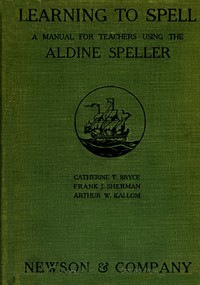
Learning to Spell: A Manual for Teachers Using the Aldine Speller
Written by Catherine T. (Catherine Turner) Bryce,Frank J. (Frank James) Sherman,Arthur W. Kallom
Chaptra reads alongside you — AI insights, chapter breakdowns and reader discussions for every book. Join free
About this book
Reading guide
Themes, characters and key ideas in Learning to Spell: A Manual for Teachers Using the Aldine Speller, written by Chaptra AI.
- about 10 hours
- advanced
- instructive
- pedagogical
- methodical
Bryce, Sherman, and Kallom's "Learning to Spell: A Manual for Teachers Using the Aldine Speller" is a foundational pedagogical guide from the early 20th century, designed to equip elementary school teachers with effective methods for teaching spelling. It outlines a systematic, progressive approach to spelling instruction, emphasizing both phonetic principles and visual memorization, while integrating spelling with other language arts. The manual details lesson structures, classroom activities, and diagnostic strategies, aiming to foster independent spelling abilities in students. It reflects the educational philosophies of its era, advocating for a structured curriculum and the teacher's crucial role in its implementation. Ultimately, it serves as an indispensable companion to the Aldine Speller series, ensuring its intended instructional impact.
“The primary aim in teaching spelling is to equip the child with the power to spell correctly any word he may have occasion to write.”
Key themes
- Systematic Instruction
- The manual rigorously advocates for a highly structured and progressive curriculum. It breaks down spelling into manageable components, from phonetic elements to complex rules and irregular words, ensuring a logical flow of learning. This systematic approach aims to build foundational skills incrementally, preventing gaps in understanding and promoting long-term retention.
- Integrated Language Arts
- The manual strongly emphasizes that spelling should not be taught in isolation but as an integral part of broader language arts instruction. It advocates for connecting spelling with reading, writing, and oral language development, arguing that this contextual approach makes spelling more meaningful and applicable for students.
- Teacher Efficacy and Professionalism
- The manual implicitly and explicitly champions the role of the well-prepared and skilled teacher. It provides extensive guidance, not just on 'what' to teach, but 'how' to teach it effectively, thereby elevating the teacher's role from a mere facilitator to a pedagogical expert. It empowers teachers with strategies for diagnosis, remediation, and engaging instruction, fostering a sense of professional competence.
Worth discussing
How do the pedagogical principles outlined in the manual compare to contemporary spelling instruction methods?
Chapter-by-chapter breakdowns, character arcs and the full thematic analysis come with a free account.
Discussions
No one has started one yet
Questions this book opens up
No discussions yet
Be the first to start a discussion about this book!
Sign up to start the discussionReviews
No reviews yet
Be the first to review this book!