
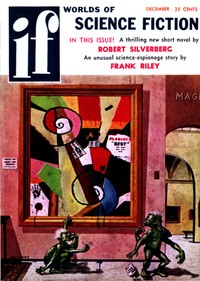
Learning Theory
Written by James V. McConnell
Chaptra reads alongside you — AI insights, chapter breakdowns and reader discussions for every book. Join free
About this book
Reading guide
Themes, characters and key ideas in Learning Theory, written by Chaptra AI.
- about 8 hours
- intermediate
- mysterious
- thought-provoking
- psychological
James V. McConnell's "Learning Theory" is a thought-provoking science fiction novel from the late 1950s that delves into the depths of psychology and behaviorism. The story follows a human psychologist who is abducted by aliens and becomes the unwitting subject of an elaborate psychological experiment, reminiscent of a Skinner Box, on an alien spaceship. Forced to undergo various learning tasks, the protagonist grapples with his identity and the ethical implications of his situation, reflecting on the nature of learning and human agency. His ultimate goal becomes to subvert the alien psychologist's expectations, challenging the very principles of behaviorism he once studied. The novel serves as a critical examination of scientific experimentation, free will, and the limits of understanding behavior across species.
“To be understood is one thing; to be utterly predictable, quite another. That is where I draw the line.”
Key themes
- Behaviorism and Learning
- This is the central theme, directly addressed by the book's title and the protagonist's profession. The novel explores the principles of behaviorism—conditioning, reinforcement, stimulus-response—through the alien experiment. It examines how these theories apply (or fail to apply) to complex conscious beings, pushing the boundaries of what 'learning' truly means beyond mechanistic responses.
- Free Will vs. Determinism
- At the core of the protagonist's struggle is the philosophical conflict between acting out of genuine choice and being merely a product of environmental conditioning. His defiance against the alien's expectations is a powerful assertion of free will against a deterministic framework, questioning whether even the most sophisticated beings can be fully reduced to predictable behavioral patterns.
- Ethics of Experimentation
- The novel vividly portrays the moral implications of scientific research when conducted without consent or regard for the subject's well-being. The alien experiment serves as a stark allegory for questionable practices in human science, prompting reflection on the boundaries of scientific inquiry and the inherent rights of sentient beings, regardless of species.
Worth discussing
How does the novel challenge or affirm your understanding of free will versus determinism?
Chapter-by-chapter breakdowns, character arcs and the full thematic analysis come with a free account.
Discussions
No one has started one yet
Questions this book opens up
No discussions yet
Be the first to start a discussion about this book!
Sign up to start the discussionReviews
No reviews yet
Be the first to review this book!