
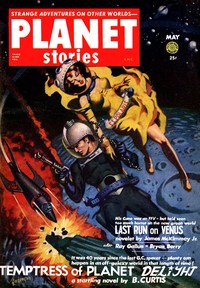
Last Run on Venus
Written by James McKimmey
Chaptra reads alongside you — AI insights, chapter breakdowns and reader discussions for every book. Join free
About this book
Reading guide
Themes, characters and key ideas in Last Run on Venus, written by Chaptra AI.
- about 8 hours
- intermediate
- Adventurous
- Tense
- Moralistic
James McKimmey, Jr.'s "Last Run on Venus" is an early 1950s science fiction novel set on a lush, exotic Venusian colony. The story follows Nicholas Caine, a pilot, on what he intends to be his final flight over the forbidden Purple Plateau, accompanied by two affluent and irresponsible tourists, Cice and Vanny. When their jet copter is destroyed after landing in unauthorized territory, the trio becomes stranded, forcing Caine to confront not only the dangers of the alien jungle but also the moral complexities of human exploitation and colonialism. The narrative explores themes of power, greed, and the personal reckoning faced by those complicit in systems of control over vulnerable native inhabitants, culminating in Caine's metaphorical 'last run' against his own past choices.
“"Every flight over the Purple Plateau was a gamble, but this one felt like a final hand dealt by fate itself."”
Key themes
- Colonialism and Exploitation
- The novel directly addresses the ethical implications of human expansion into alien territories. The Venusian Colony represents a classic colonial structure, prioritizing resource extraction and human benefit over the rights or well-being of native inhabitants or the environment. It explores the power dynamics inherent in such systems, where the colonizers hold power and control over the vulnerable 'other,' leading to widespread exploitation.
- Moral Dilemmas and Reckoning
- At its core, the novel is a journey of moral awakening for Nicholas Caine. Stranded and stripped of his usual comforts and authority, he is forced to confront the ethical compromises he has made and the moral failings of the colonial system he serves. The 'last run' becomes a metaphorical crucible where he must choose between self-preservation, loyalty to his passengers, and a newfound sense of justice or responsibility.
- Human Greed and Entitlement
- The novel critically examines the destructive forces of human greed and the sense of entitlement that often accompanies wealth and power. The characters of Cice and Vanny embody this theme, demonstrating a casual disregard for rules, safety, and the well-being of others due to their privileged positions. Their actions serve as a catalyst for the central conflict and highlight the broader colonial greed that drives the Venusian enterprise.
Worth discussing
How does McKimmey use the Venusian setting to comment on human nature and colonialism?
Chapter-by-chapter breakdowns, character arcs and the full thematic analysis come with a free account.
Discussions
No one has started one yet
Questions this book opens up
No discussions yet
Be the first to start a discussion about this book!
Sign up to start the discussionReviews
No reviews yet
Be the first to review this book!