
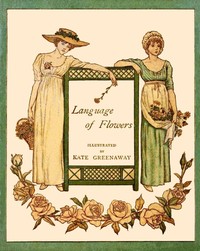
Language of Flowers
Written by Kate Greenaway
Chaptra reads alongside you — AI insights, chapter breakdowns and reader discussions for every book. Join free
About this book
Reading guide
Themes, characters and key ideas in Language of Flowers, written by Chaptra AI.
- about 3 hours
- beginner
- charming
- sentimental
- informative
Kate Greenaway's "Language of Flowers" is a charming late 19th-century compendium beautifully illustrating and cataloging the symbolic meanings of various flora. This non-narrative work functions as an enchanting guide to floral communication, revealing how different blooms were used to convey emotions and sentiments in Victorian society. Through an alphabetical arrangement, each flower is paired with a succinct description of its attributed meaning, such as the rose for love or the daisy for innocence. Interspersed with Greenaway's distinctive illustrations, the book serves as both a practical reference for deciphering floral messages and an aesthetic celebration of nature's expressive beauty, inviting readers into a deeper appreciation of the connection between botany and human emotion.
“The Rose: Love.”
Key themes
- Communication and Symbolism
- The core theme of the book, exploring how an intricate system of non-verbal communication was developed using flowers. Each bloom acts as a 'word' or 'phrase,' allowing for the expression of complex sentiments without direct speech. This theme highlights the human desire to convey meaning and the ingenuity in creating symbolic languages.
- Nature's Beauty and Significance
- The book celebrates the inherent beauty and expressive potential of the natural world, particularly flowers. It elevates flora beyond mere botanical specimens to vital elements capable of conveying deep human emotions and aesthetic pleasure. This theme underscores a romantic appreciation for nature and its capacity to mirror or evoke human experience.
- Art and Illustration
- Kate Greenaway's distinctive artistic style is inseparable from the book's identity. The illustrations are not mere decorative elements but integral components that enhance the emotional and aesthetic impact of the floral meanings. This theme underscores the power of visual art to communicate, evoke sentiment, and contribute to the overall message of a literary work.
Worth discussing
How does the concept of floriography reflect Victorian social norms and communication styles?
Chapter-by-chapter breakdowns, character arcs and the full thematic analysis come with a free account.
Discussions
No one has started one yet
Questions this book opens up
No discussions yet
Be the first to start a discussion about this book!
Sign up to start the discussionReviews
No reviews yet
Be the first to review this book!