
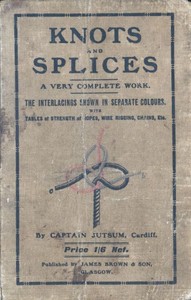
Knots, Bends, Splices: With tables of strengths of ropes, etc. and wire rigging
Written by Captain Jutsum
Chaptra reads alongside you — AI insights, chapter breakdowns and reader discussions for every book. Join free
About this book
Reading guide
Themes, characters and key ideas in Knots, Bends, Splices: With tables of strengths of ropes, etc. and wire rigging, written by Chaptra AI.
- about 15 hours
- intermediate
- instructive
- practical
- detailed
Captain Jutsum's "Knots, Bends, Splices" is a foundational early 20th-century manual dedicated to the art and science of rope work, primarily for maritime applications. It systematically instructs readers on a vast array of knot-tying, bending, and splicing techniques, complemented by essential data on rope strength and construction for both natural and wire rigging. The book serves as an indispensable practical guide, moving from basic cordage manipulation to advanced methods, ensuring sailors and nautical enthusiasts acquire the critical skills for efficient and safe handling of ropes. Through clear diagrams and detailed instructions, Jutsum equips readers with the knowledge necessary for competence and reliability in maritime settings, reflecting a deep understanding of traditional seamanship.
“The efficient handling and securing of ropes is paramount in all maritime settings.”
Key themes
- Mastery of Craft
- The book's overarching purpose is to guide the reader towards complete mastery of rope work. Every instruction, diagram, and technique presented is a step towards achieving a high level of proficiency and understanding in knot tying, bending, and splicing. It emphasizes precision, practice, and the deep knowledge required to execute these skills flawlessly, reflecting a dedication to excellence in a practical discipline.
- Safety and Reliability
- In maritime settings, the integrity of knots and rope work is directly tied to safety, for both individuals and vessels. This theme is implicitly and explicitly woven throughout the book, as each technique is presented as a reliable method to secure, join, or manipulate ropes without failure. The inclusion of tables on rope strengths underscores the critical importance of understanding material limitations to ensure operational safety.
- Efficiency and Practicality
- The book is fundamentally a guide to practical problem-solving. Every knot, bend, and splice is presented as a functional tool designed for specific purposes, emphasizing efficiency in execution and utility in application. The focus is on methods that are not only effective but also expedient, allowing sailors to perform necessary tasks quickly and reliably in often challenging conditions. This pragmatism is central to the manual's utility.
Worth discussing
How does the historical context of the early 20th century influence the types of knots and rope work emphasized in the book?
Chapter-by-chapter breakdowns, character arcs and the full thematic analysis come with a free account.
Discussions
No one has started one yet
Questions this book opens up
No discussions yet
Be the first to start a discussion about this book!
Sign up to start the discussionReviews
No reviews yet
Be the first to review this book!