
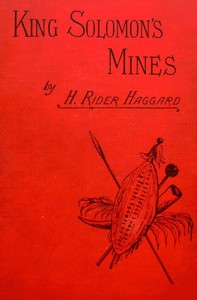
King Solomon's Mines
Written by H. Rider (Henry Rider) Haggard
Chaptra reads alongside you — AI insights, chapter breakdowns and reader discussions for every book. Join free
About this book
Reading guide
Themes, characters and key ideas in King Solomon's Mines, written by Chaptra AI.
- about 10 hours
- intermediate
- adventurous
- mysterious
- perilous
H. Rider Haggard's 'King Solomon's Mines' is a foundational adventure novel following the cynical but brave hunter Allan Quatermain, who is persuaded by Sir Henry Curtis and Captain John Good to search for Curtis's missing brother in the uncharted African interior. Their perilous journey leads them to the hidden kingdom of Kukuanaland, a land rich in diamonds and ancient secrets, where they become embroiled in a tribal succession struggle. Amidst thrilling encounters with wildlife, treacherous landscapes, and fierce warriors, the trio helps the rightful king, Ignosi (formerly Umbopa), reclaim his throne. The ultimate goal remains the legendary King Solomon's Mines, a treasure trove that promises immense wealth but demands a high price for its discovery.
“I am a hunter, and a man of peace, but I have seen much, and I have learned that the only sure thing in life is death.”
Key themes
- Colonialism and Imperialism
- The novel is deeply embedded in the context of late 19th-century British imperialism. It reflects the Victorian fascination with exploring and 'civilizing' unknown territories, often portraying European intervention as a force for good or order, even when it involves meddling in indigenous affairs. The 'white man's burden' is subtly present, with the protagonists bringing firearms and their sense of justice to a 'savage' land.
- The 'Lost World' and the Unknown
- Haggard popularized the 'lost world' trope, creating a fantastical, untouched civilization hidden from the modern world. This theme speaks to the human desire for discovery, the allure of the exotic, and the romantic notion of encountering ancient, unspoiled cultures and landscapes, even if often viewed through a Eurocentric lens.
- Masculinity and Brotherhood
- The novel celebrates a particular ideal of Victorian masculinity: brave, stoic, honorable, and physically capable. The bonds forged between Quatermain, Curtis, and Good, and eventually with Ignosi, are central to the story, highlighting loyalty, mutual respect, and the strength found in solidarity amidst extreme adversity.
Worth discussing
How does Allan Quatermain's role as narrator influence the reader's perception of the events and characters, particularly the African tribes?
Chapter-by-chapter breakdowns, character arcs and the full thematic analysis come with a free account.
Discussions
No one has started one yet
Questions this book opens up
No discussions yet
Be the first to start a discussion about this book!
Sign up to start the discussionReviews
No reviews yet
Be the first to review this book!