
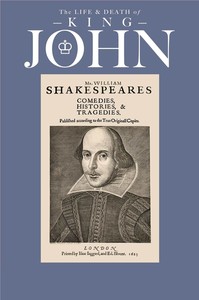
King John
Written by William Shakespeare
Chaptra reads alongside you — AI insights, chapter breakdowns and reader discussions for every book. Join free
About this book
Reading guide
Themes, characters and key ideas in King John, written by Chaptra AI.
- about 8 hours
- advanced
- Political
- Tragic
- Intriguing
William Shakespeare's "King John" is a historical play delving into the tumultuous reign of King John of England, who grapples with a disputed claim to the throne against his nephew, Prince Arthur. The narrative unfolds amidst escalating conflicts with France and the powerful Papacy, forcing John into morally compromising decisions, most notably the order for Arthur's death. As John's hold on power weakens through internal rebellion and external invasion, the play explores the precarious nature of kingship and the corrosive effects of political expediency. Ultimately, John succumbs to illness and treachery, leaving England's future to be secured by the pragmatic and patriotic Philip the Bastard.
“Our strong possession and our right for us!”
Key themes
- Legitimacy and Usurpation
- The central conflict of the play revolves around King John's disputed claim to the throne, challenged by his nephew Arthur's stronger hereditary right. Shakespeare explores what constitutes legitimate rule: birthright, divine will, or simply the ability to hold and defend the crown. John's constant insecurity fuels his actions and ultimately leads to his downfall, highlighting the instability of a reign built on usurpation.
- National Identity and Patriotism
- Through the character of Philip the Bastard, the play explores the burgeoning sense of English national identity. Initially cynical about the self-serving motives of rulers ('Commodity'), the Bastard ultimately becomes the play's most fervent patriot, rallying England against foreign invasion and internal division. His final speech is a powerful declaration of English sovereignty and unity, suggesting that true leadership lies in defending the nation above personal gain or dynastic squabbles.
- Power and Conscience
- This theme examines the corrupting influence of power and the moral compromises leaders are forced to make. King John's descent into tyranny, exemplified by his order to murder Arthur, showcases how absolute power can erode a ruler's conscience. Conversely, Hubert de Burgh's internal struggle demonstrates the conflict between duty and personal morality, questioning the extent to which one should obey immoral commands from authority.
Worth discussing
How does Shakespeare portray the concept of legitimate rule versus actual power in 'King John'?
Chapter-by-chapter breakdowns, character arcs and the full thematic analysis come with a free account.
Discussions
No one has started one yet
Questions this book opens up
No discussions yet
Be the first to start a discussion about this book!
Sign up to start the discussionReviews
No reviews yet
Be the first to review this book!