
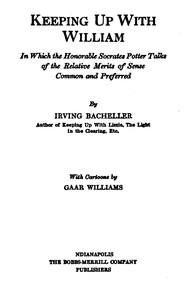
Keeping Up with William: In which the Honorable Socrates Potter Talks of the Relative Merits of Sense Common and Preferred
Written by Irving Bacheller
Chaptra reads alongside you — AI insights, chapter breakdowns and reader discussions for every book. Join free
About this book
Reading guide
Themes, characters and key ideas in Keeping Up with William: In which the Honorable Socrates Potter Talks of the Relative Merits of Sense Common and Preferred, written by Chaptra AI.
- about 8 hours
- intermediate
- philosophical
- critical
- moralistic
Keeping Up with William: In which the Honorable Socrates Potter Talks of the Relative Merits of Sense Common and Preferred is an early 20th-century novel by Irving Bacheller, set during World War I. The narrative unfolds through the reflections and conversations of Socrates Potter, a country lawyer, who critiques contemporary societal values and the concept of 'Williamism.' This 'Williamism' metaphorically represents the arrogance of inherited superiority, directly linking to German militarism and broader issues of pride and idleness. Potter contrasts the productive toil of past generations with the self-indulgent behaviors he observes in modern individuals, particularly women. Through anecdotes and philosophical discussions, the book advocates for common sense, democracy, and moral responsibility as antidotes to societal decay and the dangers of unchecked ambition.
“Common sense, my friends, is not so common as it once was, especially when measured against the preferred notions of superiority.”
Key themes
- Common Sense vs. Inherited Superiority ('Williamism')
- This is the central ideological conflict of the novel. Potter champions common sense – practical wisdom, hard work, and democratic principles – against 'Williamism,' which represents the dangerous arrogance of inherited privilege, militarism, and the belief in one's inherent right to dominate others. The theme explores the societal and global repercussions of valuing unearned status over earned merit and practical wisdom.
- Consequences of Pride and Arrogance
- The novel vividly illustrates how unchecked pride and arrogance, whether in individuals or nations, inevitably lead to moral decay, social discord, and catastrophic outcomes. World War I serves as the ultimate, tragic example of national arrogance, but Potter also shows its corrosive effects on individual lives and communities.
- Societal Decay and Critique of Modernity
- Potter expresses profound concern over what he perceives as a decline in societal values, contrasting the industriousness, moral fortitude, and simplicity of past generations with the idleness, self-indulgence, and superficiality he observes in contemporary society. His critique extends to changing social roles, particularly those of women, which he sees as contributing to this broader decline.
Worth discussing
How does Socrates Potter define 'Williamism,' and how relevant is this concept to modern political and social dynamics?
Chapter-by-chapter breakdowns, character arcs and the full thematic analysis come with a free account.
Discussions
No one has started one yet
Questions this book opens up
No discussions yet
Be the first to start a discussion about this book!
Sign up to start the discussionReviews
No reviews yet
Be the first to review this book!