
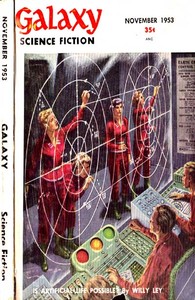
Keep Your Shape
Written by Robert Sheckley
Chaptra reads alongside you — AI insights, chapter breakdowns and reader discussions for every book. Join free
About this book
Read it with a club
Chaptra's fiction clubs — small groups reading the same books and talking as they go.


CraxMe Readers Book Club
Fiction
- 385 members
- 227 discussions
- Started December 2025
Welcome to the Readers Book Club. This is an informal group for like-minded people, where you can discuss books, share and recommend, track your reading progress, and lots more. Discuss Books — all about books. Discuss a particular book or genre, share your favourite quotes. Book Reviews — loved a book and highly recommend it? Or was it just average? Share your review and discuss with fellow readers. (May contain spoilers.) Group Reads — what is a book club without a group read! Buddy Reads — planning to read a book and looking for someone to read it with? Post in the Buddy Read request thread, find a reading buddy, and start discussing.
Read Keep Your Shape alongside people who are reading it too.
Also here: Doorstops, First Lines Club
Chaptra Prime — paid clubs, every club feature, and unlimited reading support, for $5 a month or $60 once.
See PrimeReading guide
Themes, characters and key ideas in Keep Your Shape, written by Chaptra AI.
- about 8 hours
- intermediate
- thought-provoking
- philosophical
- exploratory
Robert Sheckley's "Keep Your Shape" is a classic science fiction short story from the early 1950s that delves into profound themes of identity and conformity through the lens of shapeshifting extraterrestrials, the Grom. The narrative follows Pid, a Grom pilot, who leads a mission to establish contact with Earth using advanced Displacer technology, only to find his crew grappling with internal dissent and a yearning for freedom from their rigid caste system. As Pid navigates an unfamiliar planet and the challenges of his own nature, he is increasingly tempted by the allure of shapelessness and self-determination. The story culminates in Pid's radical transformation, as he embraces a life free from societal constraints, celebrating the joy of abandoning strict rules for personal liberation.
“"To be without shape is to be without purpose, or so they taught us. But what if purpose is merely a cage?"”
Key themes
- Identity and Self-Determination
- The core theme explores the nature of identity, particularly how it is shaped by external societal pressures versus internal desires. The Grom's ability to shapeshift literally embodies this, as their assigned shapes dictate their roles. Pid's journey highlights the struggle to define oneself beyond prescribed categories and the profound liberation found in self-determination.
- Conformity vs. Freedom
- This theme examines the tension between adhering to societal norms and the innate human (or alien) desire for freedom and individuality. The Grom's caste system, which dictates their shapes and therefore their lives, represents the forces of conformity. Pid's internal struggle and eventual rebellion embody the triumph of individual freedom over restrictive social structures.
- Societal Structures and Critique
- Sheckley uses the alien Grom society to offer a sharp critique of human societal structures, particularly those based on rigid hierarchies and pre-determined roles. The story questions the value and sustainability of systems that prioritize order and conformity over individual well-being and freedom, suggesting that such systems inevitably lead to internal dissent and eventual collapse or transformation.
Worth discussing
How does the Grom's ability to shapeshift serve as a metaphor for human identity and societal roles?
Chapter-by-chapter breakdowns, character arcs and the full thematic analysis come with a free account.
Discussions
No one has started one yet
Questions this book opens up
No discussions yet
Be the first to start a discussion about this book!
Sign up to start the discussionReviews
No reviews yet
Be the first to review this book!