
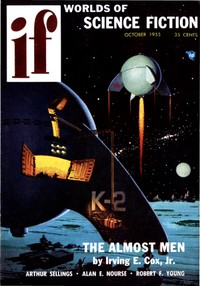
Juvenile Delinquent
Written by Edward W. Ludwig
Chaptra reads alongside you — AI insights, chapter breakdowns and reader discussions for every book. Join free
About this book
Reading guide
Themes, characters and key ideas in Juvenile Delinquent, written by Chaptra AI.
- about 1 hours
- intermediate
- Dystopian
- Somber
- Cautionary
Edward W. Ludwig's "Juvenile Delinquent" is a poignant mid-20th century science fiction short story set in a dystopian 2056 where reading is outlawed as a subversive act. The narrative follows eight-year-old Ronnie, who discovers the joy of literacy through a friend, a revelation that shatters his family. His government-employed father, a staunch conformist, reacts with fury upon learning of his son's forbidden education, especially when confronted with his wife's own secret past as a reader. The story explores the devastating consequences of state-enforced ignorance and the suppression of independent thought, culminating in the tragic disintegration of Ronnie's family. It serves as a powerful critique of authoritarianism and a cautionary tale about the dangers of intellectual censorship.
“Reading is a disease, a path to disobedience. The state knows what's best for us, and it is not in books.”
Key themes
- Censorship and Suppression of Knowledge
- This is the central theme, exploring a dystopian society where the act of reading is criminalized. The story vividly portrays how a state can maintain control by limiting access to information and independent thought, turning knowledge into a weapon against its own citizens.
- Conformity vs. Rebellion
- The story starkly contrasts the enforced conformity of the dystopian society, embodied by Ronnie's father, with the burgeoning rebellion of Ronnie and the hidden defiance of his mother. It examines the pressures to conform and the courage required to resist, even in small, personal ways.
- The Value of Literacy and Independent Thought
- At its core, the story is an ardent defense of literacy and the ability to think for oneself. It argues that reading is not merely a skill but a fundamental human right that unlocks imagination, empathy, and critical understanding, essential for a truly free society.
Worth discussing
How does the story use the act of reading as a symbol of rebellion and independent thought?
Chapter-by-chapter breakdowns, character arcs and the full thematic analysis come with a free account.
Discussions
No one has started one yet
Questions this book opens up
No discussions yet
Be the first to start a discussion about this book!
Sign up to start the discussionReviews
No reviews yet
Be the first to review this book!