
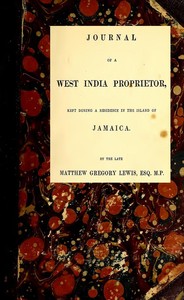
Journal of a West India Proprietor: Kept During a Residence in the Island of Jamaica
Written by M. G. (Matthew Gregory) Lewis
Chaptra reads alongside you — AI insights, chapter breakdowns and reader discussions for every book. Join free
About this book
Read it with a club
Small groups reading the same books and talking as they go.


News
- 4 members
- 1,813 discussions
- Active Sep 11
Read Journal of a West India Proprietor: Kept During a Residence in the Island of Jamaica alongside people who are reading it too.
Also here: News Bulletin, Just Joking....
Chaptra Prime — paid clubs, every club feature, and unlimited reading support, for $5 a month or $60 once.
See PrimeReading guide
Themes, characters and key ideas in Journal of a West India Proprietor: Kept During a Residence in the Island of Jamaica, written by Chaptra AI.
- about 8 hours
- intermediate
- Observational
- Historical
- Melancholy
M. G. Lewis's "Journal of a West India Proprietor" offers a unique, first-person account of a British absentee landlord's experiences managing his Jamaican sugar estates in the early 19th century. Written during two separate residencies, the journal details Lewis's transatlantic voyages, his observations of colonial society, the natural environment, and, most significantly, his interactions with and reflections upon the enslaved population he inherited. The narrative provides invaluable, albeit biased, insight into the daily realities of the slave economy from a proprietor's perspective, revealing the inherent contradictions and moral complexities of the system. It showcases Lewis's attempts to temper the harshness of slavery with what he perceived as benevolent management, while ultimately upholding the institution itself.
“I was born with a silver spoon in my mouth, but it was dipped in the blood of slaves.”
Key themes
- The Morality and Inhumanity of Slavery
- This is the central theme, explored through Lewis's internal conflicts and observations. He frequently expresses discomfort with the violence, dehumanization, and inherent injustice of slavery, even as he benefits from it. The journal highlights the psychological toll on both the enslaved and the enslaver, revealing the profound moral compromises required to sustain such a system.
- Proprietorship and Responsibility
- Lewis grapples with the immense responsibility of managing vast estates and hundreds of enslaved people. He attempts to embody a 'benevolent' proprietorship, believing he can improve the lives of his 'dependents' within the existing system. This theme explores the limits of individual moral action within a deeply immoral economic structure and the paternalistic attitudes of the planter class.
- The Clash of Cultures and Colonial Identity
- The journal illustrates the cultural disjunction between the British proprietor and the West Indian environment, encompassing both the enslaved African-descended population and the creole white society. Lewis, a man of letters from England, observes and often judges the local customs, language, and social structures, highlighting the British attempt to impose order and values on a foreign landscape and population.
Worth discussing
How does Lewis's perspective as a proprietor influence his observations of slavery, and what are the limitations of this viewpoint?
Chapter-by-chapter breakdowns, character arcs and the full thematic analysis come with a free account.
Discussions
No one has started one yet
Questions this book opens up
No discussions yet
Be the first to start a discussion about this book!
Sign up to start the discussionReviews
No reviews yet
Be the first to review this book!