
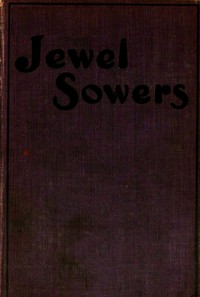
Jewel sowers: a novel
Written by Edith Allonby
Chaptra reads alongside you — AI insights, chapter breakdowns and reader discussions for every book. Join free
About this book
Read it with a club
Chaptra's fiction clubs — small groups reading the same books and talking as they go.


CraxMe Readers Book Club
Fiction
- 385 members
- 227 discussions
- Started December 2025
Welcome to the Readers Book Club. This is an informal group for like-minded people, where you can discuss books, share and recommend, track your reading progress, and lots more. Discuss Books — all about books. Discuss a particular book or genre, share your favourite quotes. Book Reviews — loved a book and highly recommend it? Or was it just average? Share your review and discuss with fellow readers. (May contain spoilers.) Group Reads — what is a book club without a group read! Buddy Reads — planning to read a book and looking for someone to read it with? Post in the Buddy Read request thread, find a reading buddy, and start discussing.
Read Jewel sowers: a novel alongside people who are reading it too.
Also here: Doorstops, First Lines Club
Chaptra Prime — paid clubs, every club feature, and unlimited reading support, for $5 a month or $60 once.
See PrimeReading guide
Themes, characters and key ideas in Jewel sowers: a novel, written by Chaptra AI.
- about 8 hours
- intermediate
- mysterious
- fantastical
- oppressive
Edith Allonby's "Jewel Sowers" transports readers to Lucifram, a bizarre, early 20th-century fantastical planet where reality is inverted and a cruel golden serpent deity reigns. The narrative centers on Rosalie, a beautiful, mute woman yearning for a voice and connection in a society governed by peculiar customs and strictures. Her journey intertwines with the enigmatic Camille Barringcourt, as she navigates a world of oppression, seeking personal agency and self-discovery. The novel explores profound themes of freedom, identity, and the transformative power of finding one's inner voice amidst external challenges and societal constraints.
“On Lucifram, one did not merely walk; one *inverted* the very act of being, a constant, silent defiance of gravity, and of sense.”
Key themes
- Oppression vs. Freedom
- This theme is central to the novel, explored through Lucifram's surreal and restrictive society. The bizarre customs and stringent rules, enforced by the cruel golden serpent deity, symbolize oppressive systems that deny individual autonomy and expression. The narrative highlights the psychological and social costs of living under such a regime, contrasting it with the innate human desire for liberation and self-determination.
- The Quest for Voice and Agency
- Rosalie's personal journey is the embodiment of this theme. Her literal muteness serves as a powerful symbol for the broader human struggle to find one's voice, express one's truth, and assert personal agency within a world that often seeks to silence or control. The narrative explores the emotional and psychological toll of being voiceless and the courage required to reclaim one's narrative and power.
- Identity and Self-Discovery
- Through Rosalie's journey, the novel delves into the process of self-discovery, particularly in a context where external societal pressures attempt to define or limit an individual. Her quest for a voice is intrinsically linked to understanding who she truly is outside of the constraints placed upon her, exploring the transformative power of embracing one's authentic self.
Worth discussing
How does Lucifram's inverted reality and unique customs serve as an allegory for real-world societal norms and expectations?
Chapter-by-chapter breakdowns, character arcs and the full thematic analysis come with a free account.
Discussions
No one has started one yet
Questions this book opens up
No discussions yet
Be the first to start a discussion about this book!
Sign up to start the discussionReviews
No reviews yet
Be the first to review this book!