
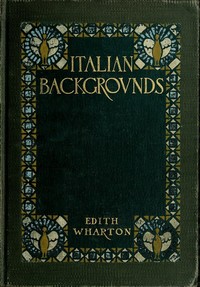
Italian Backgrounds
Written by Edith Wharton
Chaptra reads alongside you — AI insights, chapter breakdowns and reader discussions for every book. Join free
About this book
Reading guide
Themes, characters and key ideas in Italian Backgrounds, written by Chaptra AI.
- about 8 hours
- advanced
- evocative
- reflective
- observational
Edith Wharton's "Italian Backgrounds" is a compelling collection of early 20th-century essays that meticulously document her travels and reflections across various Italian locales. The work embarks on a journey from the ordered beauty of the Swiss Alps, specifically the village of Splügen, to the rich, human-influenced landscapes and cultural depths of Italy. Wharton's keen observations capture the architectural splendor, natural beauty, and everyday life, contrasting the picturesque with the passionate and sometimes chaotic Italian spirit. Through her sophisticated prose, she reveals a profound appreciation for Italy's unique character, offering insights into its art, history, and the interplay between its environment and cultural identity. The essays serve as both a travelogue and a philosophical exploration of place, culture, and the discerning traveler's experience.
“The journey over the pass was not merely a change of landscape; it was a transition from one soul of Europe to another, from the ordered precision of the Alps to the rich, human-infused chaos of Italy.”
Key themes
- Cultural Observation and Contrast
- This theme is central to the entire collection, as Wharton meticulously observes and contrasts the cultural characteristics of different regions, most notably between Switzerland and Italy. She highlights how distinct environments, historical trajectories, and daily practices shape unique national and regional identities, influencing everything from landscape aesthetics to architectural styles and social behaviors. This comparative approach allows for a deeper understanding of what makes each culture distinct.
- Beauty and Aesthetics
- Wharton's essays are deeply concerned with the nature of beauty, exploring it across various forms: natural landscapes, architectural marvels, and artistic expressions. She delves into what constitutes beauty in different contexts, how it is perceived, and its profound impact on the human spirit. Her analysis extends beyond mere description to an intellectual appreciation of aesthetic principles and their historical evolution in Italy.
- The Human Element in Landscape and Culture
- This theme explores the intricate relationship between human activity and the natural environment, demonstrating how landscapes are not merely static backdrops but are shaped by and, in turn, influence human cultures. Wharton shows how daily life, agricultural practices, historical events, and artistic endeavors leave an indelible mark on the physical world, creating a unique cultural landscape.
Worth discussing
How does Wharton's initial description of Splügen, Switzerland, set the stage for her exploration of Italy, both geographically and thematically?
Chapter-by-chapter breakdowns, character arcs and the full thematic analysis come with a free account.
Discussions
No one has started one yet
Questions this book opens up
No discussions yet
Be the first to start a discussion about this book!
Sign up to start the discussionReviews
No reviews yet
Be the first to review this book!