
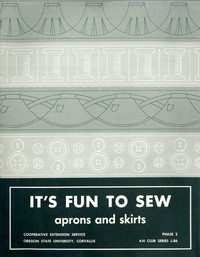
It's Fun to Sew Aprons and Skirts
Written by Theta Johnson
Chaptra reads alongside you — AI insights, chapter breakdowns and reader discussions for every book. Join free
About this book
Reading guide
Themes, characters and key ideas in It's Fun to Sew Aprons and Skirts, written by Chaptra AI.
- about 15 hours
- beginner
- Instructive
- Empowering
- Practical
Theta Johnson's "It's Fun to Sew Aprons and Skirts" is a mid-20th century instructional guidebook designed for young 4-H Club members, primarily girls, to introduce them to basic sewing skills. Through a clear, step-by-step approach, the book covers fundamental techniques from fabric selection and machine operation to creating practical garments like scarves, slippers, aprons, and skirts. It emphasizes not only technical proficiency but also personal grooming, record-keeping, and the confidence gained from completing projects. The manual serves as a foundational text for developing practical life skills and fostering creativity within a structured educational program.
“"The first step to good sewing is to learn to use your sewing machine correctly."”
Key themes
- Skill Development and Practicality
- The core theme is the acquisition of tangible, practical skills. The book systematically breaks down complex tasks into manageable steps, allowing young learners to master sewing techniques that can be applied to create useful garments and mend clothing. This theme underscores the value of self-sufficiency and the satisfaction derived from creating something with one's own hands.
- Empowerment through Self-Sufficiency
- By teaching children to sew their own clothing and household items, the book instills a sense of empowerment. The ability to create, mend, and care for garments fosters independence and confidence, moving beyond mere instruction to cultivate a belief in one's own capabilities. This theme is particularly significant in the context of the 4-H program, which aimed to develop responsible and capable citizens.
- Domestic Arts and Home Economics Education
- The book serves as a primary example of mid-20th century home economics education, particularly for girls. It reflects the societal value placed on domestic skills as essential for managing a household and personal presentation. While rooted in historical gender roles, it presents these skills as valuable and enjoyable, contributing to a well-rounded individual.
Worth discussing
How do instructional books like this reflect the educational priorities and gender roles of their time?
Chapter-by-chapter breakdowns, character arcs and the full thematic analysis come with a free account.
Discussions
No one has started one yet
Questions this book opens up
No discussions yet
Be the first to start a discussion about this book!
Sign up to start the discussionReviews
No reviews yet
Be the first to review this book!