
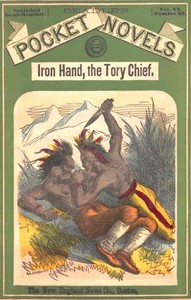
Iron Hand, Chief of the Tory League; or, The Double Face
Written by Frederick Forest
Chaptra reads alongside you — AI insights, chapter breakdowns and reader discussions for every book. Join free
About this book
Reading guide
Themes, characters and key ideas in Iron Hand, Chief of the Tory League; or, The Double Face, written by Chaptra AI.
- about 9 hours
- intermediate
- historical
- patriotic
- conflicted
Frederick Forest's "Iron Hand, Chief of the Tory League; or, The Double Face" is a late 19th-century historical novel set amidst the tumultuous American Revolutionary War. It chronicles the journey of Captain Edgar Sherwood, a young aristocrat of English descent who, driven by a sense of injustice from his homeland, pledges his allegiance to the colonial cause. The narrative intensifies as Sherwood's patriotic convictions clash with his betrothed's staunchly Tory father, leading to a personal severance that propels him into direct action. The story unfolds with Sherwood's heroic endeavors against the nefarious Tory League, led by the enigmatic 'Iron Hand,' blending personal drama with the grander conflict for American independence.
“"My heart, sir, belongs to America now, though my birth may tie me to a crown that has forsaken its own." (Attributed to Edgar Sherwood)”
Key themes
- Duty vs. Personal Loyalty
- This theme explores the profound conflict individuals face when their personal affections or familial ties clash with their moral or political obligations. Sherwood's decision to join the colonial cause, severing his engagement to his betrothed due to her father's Tory allegiance, is the central manifestation of this struggle. It questions where one's ultimate loyalty should lie: with family, love, or the perceived greater good of a nation.
- Patriotism and Betrayal
- The core of the novel, this theme examines the nature of national allegiance during a time of civil war. Sherwood's 'feeling wronged by his homeland' fuels his patriotism for the colonial cause, while the Tory League represents a contrasting loyalty to the Crown. The 'Double Face' in the title strongly suggests an exploration of betrayal, both personal and political, highlighting the shifting allegiances and hidden motives inherent in conflict.
- The Nature of War and Conflict
- The novel uses the American Revolutionary War as its backdrop to explore the profound impact of armed conflict on individuals and society. It portrays war not just as battles, but as a force that reshapes personal relationships, moral choices, and the very fabric of identity. The setting at Fort Ann and the impending attack emphasize the constant threat and the psychological toll of warfare.
Worth discussing
How does Captain Sherwood's personal grievance influence his decision to join the colonial cause, and does this make his patriotism more or less compelling?
Chapter-by-chapter breakdowns, character arcs and the full thematic analysis come with a free account.
Discussions
No one has started one yet
Questions this book opens up
No discussions yet
Be the first to start a discussion about this book!
Sign up to start the discussionReviews
No reviews yet
Be the first to review this book!