
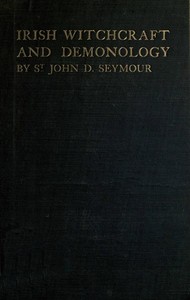
Irish Witchcraft and Demonology
Written by St. John D. (St. John Drelincourt) Seymour
Chaptra reads alongside you — AI insights, chapter breakdowns and reader discussions for every book. Join free
About this book
Reading guide
Themes, characters and key ideas in Irish Witchcraft and Demonology, written by Chaptra AI.
- about 8 hours
- advanced
- historical
- analytical
- somber
St. John D. Seymour's "Irish Witchcraft and Demonology" is an early 20th-century historical account challenging the perception of Ireland's immunity to witchcraft. The book meticulously compiles and analyzes scattered historical records, arguing that while witch persecution didn't reach the same fervor as in other European nations, a distinct Irish witchcraft narrative existed, exemplified by cases like Dame Alice Kyteler. Seymour explores the unique socio-political and cultural factors, including Anglo-Norman and Protestant influences, that shaped the phenomenon in Ireland. He delves into specific trials and broader supernatural beliefs, offering insights into the historical context and reasons for the country's relative lack of widespread witch hunts, such as political turmoil and limited witchcraft literature. Ultimately, the work serves as a foundational text for understanding the nuances of Irish magical beliefs and legal history.
“It is a common error to suppose that Ireland was entirely free from the superstition of witchcraft, or that no such cases are recorded in her annals.”
Key themes
- The Nature of Belief and Superstition
- This theme explores how beliefs in witchcraft, magic, and demonology permeated Irish society, from common folk to the educated elite. Seymour investigates the origins and manifestations of these beliefs, distinguishing between indigenous folk magic and more formal accusations of malevolent sorcery influenced by European demonology. It examines the psychological and social functions of such beliefs.
- Historical Interpretation and Reassessment
- Seymour's primary goal is to re-evaluate Ireland's historical relationship with witchcraft, challenging the prevailing notion of its absence. This theme focuses on the process of historical inquiry itself, the critical analysis of sparse and often biased records, and the construction of a more nuanced historical narrative. It highlights the historian's role in correcting popular misconceptions.
- Legal History and Persecution
- The book delves into the legal frameworks and processes surrounding accusations of witchcraft in Ireland. It examines the nature of trials, the roles of ecclesiastical and secular courts, and the societal responses to those accused. This theme also explores the reasons for the relatively less severe and widespread persecution in Ireland compared to other European regions.
Worth discussing
How does Seymour challenge the conventional understanding of witchcraft in Ireland, and what evidence does he use to support his claims?
Chapter-by-chapter breakdowns, character arcs and the full thematic analysis come with a free account.
Discussions
No one has started one yet
Questions this book opens up
No discussions yet
Be the first to start a discussion about this book!
Sign up to start the discussionReviews
No reviews yet
Be the first to review this book!