
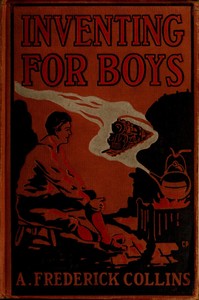
Inventing for Boys
Written by A. Frederick (Archie Frederick) Collins
Chaptra reads alongside you — AI insights, chapter breakdowns and reader discussions for every book. Join free
About this book
Reading guide
Themes, characters and key ideas in Inventing for Boys, written by Chaptra AI.
- about 8 hours
- intermediate
- uplifting
- instructive
- practical
A. Frederick Collins's "Inventing for Boys" is an early 20th-century practical guide designed to ignite and cultivate the inventive spirit in young male readers. The book posits that every boy possesses inherent creative potential and systematically outlines the journey from initial conceptualization to the potential monetization of an invention. Collins masterfully combines encouragement with practical instruction, emphasizing the dual importance of imaginative thinking and sound technical knowledge. Through clear guidance, he equips aspiring inventors with the foundational steps to observe, experiment, develop, and protect their original ideas, fostering both persistence and an understanding of the practicalities of innovation. Ultimately, it serves as a foundational text for nurturing future scientists and engineers.
“Every boy possesses innate inventive potential.”
Key themes
- Creativity and Imagination
- The book champions the idea that creativity is not an exclusive trait but an innate potential in every individual, particularly young boys. It encourages readers to harness their imagination to conceive novel ideas and solutions, emphasizing that the inventive process begins with a spark of original thought.
- Persistence and Resilience
- Collins repeatedly stresses that invention is not a straight path to success but often involves trials, errors, and setbacks. The book instills the value of persistence, encouraging readers to persevere through challenges, learn from failures, and continuously refine their ideas until they achieve their goals.
- Practical Application and Technical Knowledge
- Beyond mere conceptualization, the book highlights the necessity of grounding creative ideas in practical reality. It emphasizes that successful invention requires not only imagination but also a solid understanding of technical principles and the ability to translate ideas into tangible forms, whether through sketches, models, or prototypes.
Worth discussing
How does Collins's approach to inspiring invention compare to modern STEM education initiatives?
Chapter-by-chapter breakdowns, character arcs and the full thematic analysis come with a free account.
Discussions
No one has started one yet
Questions this book opens up
No discussions yet
Be the first to start a discussion about this book!
Sign up to start the discussionReviews
No reviews yet
Be the first to review this book!