
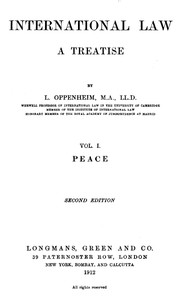
International Law. A Treatise. Volume 1 (of 2): Peace. Second Edition
Written by L. (Lassa) Oppenheim
Chaptra reads alongside you — AI insights, chapter breakdowns and reader discussions for every book. Join free
About this book
Reading guide
Themes, characters and key ideas in International Law. A Treatise. Volume 1 (of 2): Peace. Second Edition, written by Chaptra AI.
- about 40 hours
- advanced
- authoritative
- academic
- foundational
L. Oppenheim's "International Law. A Treatise. Volume 1: Peace" is a seminal early 20th-century work that systematically establishes the foundational principles of international law. It meticulously explores the nature, sources, and subjects of this legal system, emphasizing the necessity of state consent and the sovereign equality of nations. The treatise distinguishes international law from domestic legal systems, highlighting the unique challenges of enforcement in an anarchic international arena. Through rigorous analysis, Oppenheim constructs a comprehensive framework for understanding the legal norms governing interstate relations, laying the groundwork for diplomatic conduct and conflict resolution. This volume remains a cornerstone text for students and practitioners seeking to grasp the historical and theoretical underpinnings of international legal order.
“International Law is the name for the body of customary and treaty rules which are considered legally binding by States in their intercourse with each other.”
Key themes
- The Nature and Foundations of International Law
- This theme explores the fundamental questions surrounding international law: Is it truly "law"? What makes it binding on sovereign states? Oppenheim meticulously argues for its legal status, distinguishing it from morality or comity, and posits that its authority derives from the common consent of states, driven by mutual interests and necessity for orderly international relations.
- State Sovereignty and Equality
- Oppenheim places state sovereignty at the core of his analysis, recognizing it as the supreme authority within a state's territory, independent of external control. Simultaneously, he emphasizes the sovereign equality of all states, regardless of size or power, as a fundamental principle governing their interactions under international law. This theme explores the tension between absolute state freedom and the necessity of legal constraints for international order.
- Sources of International Law
- A critical theme is the identification and hierarchical understanding of where international legal norms originate. Oppenheim thoroughly examines customary international law (derived from state practice and *opinio juris*), conventional law (treaties and agreements), and general principles of law recognized by civilized nations. This analysis provides the practical basis for identifying and applying international legal rules.
Worth discussing
To what extent does Oppenheim's positivist approach adequately explain the binding nature of international law?
Chapter-by-chapter breakdowns, character arcs and the full thematic analysis come with a free account.
Discussions
No one has started one yet
Questions this book opens up
No discussions yet
Be the first to start a discussion about this book!
Sign up to start the discussionReviews
No reviews yet
Be the first to review this book!