
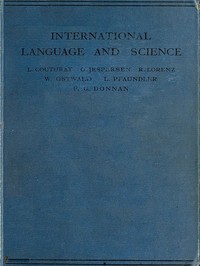
International Language and Science: Considerations on the Introduction of an International Language into Science
Written by Otto Jespersen,Louis Couturat,Wilhelm Ostwald,Richard Lorenz,Leopold Pfaundler von Hadermur
Chaptra reads alongside you — AI insights, chapter breakdowns and reader discussions for every book. Join free
About this book
Reading guide
Themes, characters and key ideas in International Language and Science: Considerations on the Introduction of an International Language into Science, written by Chaptra AI.
- about 12 hours
- advanced
- Analytical
- Scholarly
- Profound
This early 20th-century scholarly work, co-authored by prominent linguists and scientists, critically examines the urgent need for an international auxiliary language in science. It meticulously dissects the inefficiencies arising from linguistic diversity in scientific communication, tracing the historical decline of Latin as a lingua franca. The authors present a collective argument for moving beyond previous artificial language attempts like Volapük and Esperanto, advocating instead for the systematic development of a new, scientifically grounded international language. The book serves as a foundational text in the discourse surrounding global scientific collaboration and the practical challenges of cross-cultural knowledge exchange.
“The current linguistic chaos impedes scientific progress and fosters intellectual isolation.”
Key themes
- The Necessity of a Universal Scientific Language
- This is the core theme, arguing that linguistic diversity creates significant inefficiencies, redundancy, and barriers to knowledge sharing, thereby impeding scientific progress. The book posits that a common language is not merely convenient but essential for global scientific advancement.
- The Scientific Method Applied to Language Creation
- A central tenet of the book is the belief that language itself can and should be designed using rational, systematic, and empirical principles, much like scientific inquiry. This theme advocates for a departure from organic language evolution towards a deliberate, logical construction of an optimal communication tool.
- Critique of Existing Auxiliary Languages
- The book meticulously analyzes the shortcomings of previous attempts at creating international languages, specifically Volapük and Esperanto. This theme explores the criteria by which an auxiliary language should be judged, emphasizing logical structure, ease of learning, and adaptability for scientific terminology.
Worth discussing
To what extent do linguistic barriers still impede scientific progress today, despite advances in translation technology?
Chapter-by-chapter breakdowns, character arcs and the full thematic analysis come with a free account.
Discussions
No one has started one yet
Questions this book opens up
No discussions yet
Be the first to start a discussion about this book!
Sign up to start the discussionReviews
No reviews yet
Be the first to review this book!