
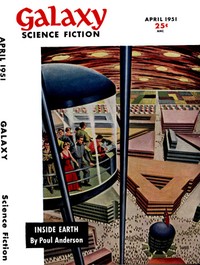
Inside Earth
Written by Poul Anderson
Chaptra reads alongside you — AI insights, chapter breakdowns and reader discussions for every book. Join free
About this book
Reading guide
Themes, characters and key ideas in Inside Earth, written by Chaptra AI.
- about 8 hours
- intermediate
- dark
- thought-provoking
- tense
Poul Anderson's "Inside Earth" is an early 1950s science fiction novel that delves into the complexities of imperialism and rebellion. The story follows Conrad Haugen, an undercover agent from the advanced Valgolian Empire, tasked with inciting an uprising among the oppressed inhabitants of Earth. As Haugen infiltrates Earthling society and revolutionary movements, his loyalties become deeply conflicted, particularly due to his developing relationship with the passionate revolutionary, Barbara Hood. The narrative explores his internal struggle with identity and the moral ambiguities of his mission, ultimately leading to an unexpected climax that forces him to confront the true meaning of freedom and loyalty.
“"Freedom is not a gift, but a struggle, and its price is often paid in blood and conscience."”
Key themes
- Identity and Loyalty
- This is the central theme, explored through Conrad Haugen's profound internal conflict. His mission forces him to adopt a new identity, which then leads to a re-evaluation of his original loyalty to the Valgolian Empire. The novel questions what defines one's identity – origin, allegiance, or personal conviction – and the complex nature of loyalty when faced with moral dilemmas.
- Imperialism and Oppression
- The novel critically examines the nature of imperial rule, depicting the Valgolian Empire's control over Earth not just as a power dynamic but as a system that erodes identity and freedom. It explores the psychological impact of living under an occupying force and the justifications empires use for their dominion.
- Rebellion and Freedom
- The narrative explores the motivations, complexities, and consequences of rebellion against an oppressive regime. It delves into what drives people to fight for freedom, the sacrifices involved, and the harsh realities and moral ambiguities inherent in such a struggle. It also questions the true meaning of freedom—is it merely the absence of oppression, or something more profound?
Worth discussing
How does Conrad Haugen's internal conflict reflect universal struggles with identity and belonging?
Chapter-by-chapter breakdowns, character arcs and the full thematic analysis come with a free account.
Discussions
No one has started one yet
Questions this book opens up
No discussions yet
Be the first to start a discussion about this book!
Sign up to start the discussionReviews
No reviews yet
Be the first to review this book!