
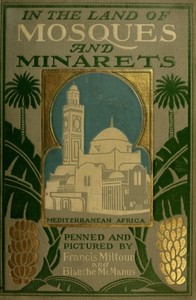
In the Land of Mosques & Minarets
Written by M. F. (Milburg Francisco) Mansfield
Chaptra reads alongside you — AI insights, chapter breakdowns and reader discussions for every book. Join free
About this book
Reading guide
Themes, characters and key ideas in In the Land of Mosques & Minarets, written by Chaptra AI.
- about 10 hours
- intermediate
- Exploratory
- Exotic
- Informative
M. F. Mansfield's "In the Land of Mosques & Minarets," published under the pseudonym Francis Miltoun, is an early 20th-century travelogue chronicling the author's extensive journey through North Africa, particularly Algeria and Tunisia. Departing from Marseilles, Miltoun seeks to move beyond conventional tourism, aiming to capture the authentic essence of the region's diverse cultures, breathtaking landscapes, and the daily lives of its inhabitants. The narrative weaves together personal observations and anecdotes, offering a vivid portrayal of the contrasts between traditional North African lifestyles and the burgeoning European influences. It serves as both an invitation to explore the exotic and a reflection on the challenges and allure of travel in a land rich with history and vibrant traditions.
“The true essence of North Africa lies not in its tourist conventions, but in the veiled mysteries of its ancient cities and the dust of its untrodden paths.”
Key themes
- Exploration and Discovery
- The central theme, focusing on the author's physical journey and intellectual quest to uncover the 'real' North Africa. It explores the human desire for new experiences, understanding different cultures, and the transformative power of travel.
- Cultural Encounter and Othering
- This theme examines the interactions between the European traveler and the indigenous North African populations. It highlights both Miltoun's genuine curiosity and appreciation, as well as the inherent biases and 'Orientalist' lens through which these encounters are often filtered, creating a sense of 'otherness'.
- Colonial Gaze and Historical Context
- This theme implicitly addresses the historical context of early 20th-century North Africa, a region largely under European colonial rule. The author's perspective, while observational, is framed by this colonial reality, often reflecting the attitudes and power dynamics of the era, even if not explicitly endorsing colonialism.
Worth discussing
How does Miltoun's stated goal of finding the 'real' North Africa align with or diverge from his actual observations and portrayals?
Chapter-by-chapter breakdowns, character arcs and the full thematic analysis come with a free account.
Discussions
No one has started one yet
Questions this book opens up
No discussions yet
Be the first to start a discussion about this book!
Sign up to start the discussionReviews
No reviews yet
Be the first to review this book!