
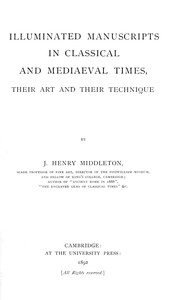
Illuminated manuscripts in classical and mediaeval times, their art and their technique
Written by J. H. (John Henry) Middleton
Chaptra reads alongside you — AI insights, chapter breakdowns and reader discussions for every book. Join free
About this book
Reading guide
Themes, characters and key ideas in Illuminated manuscripts in classical and mediaeval times, their art and their technique, written by Chaptra AI.
- about 20 hours
- advanced
- scholarly
- informative
- detailed
J. Henry Middleton's "Illuminated Manuscripts in Classical and Mediaeval Times" is a foundational late 19th-century scholarly work meticulously detailing the art and technique of manuscript illumination. It comprehensively traces the historical evolution of decorated texts from classical antiquity through the Middle Ages, culminating in the advent of printing in the sixteenth century. The book delves into the materials, methods, and artistic practices employed by scribes and illuminators, emphasizing the continuity of classical techniques throughout the mediaeval period. Middleton provides a rich overview of various manuscript forms, from early tablets to intricately decorated codices, establishing a detailed narrative of the craftsmanship inherent in these historical artifacts. It serves as an essential resource for understanding the aesthetic and technical dimensions of this intricate art form.
“"The history of illuminated manuscripts is, in fact, the history of painting in Europe for more than a thousand years, prior to the introduction of printing."”
Key themes
- Craftsmanship and Material Culture
- The book deeply delves into the meticulous craftsmanship involved in every stage of manuscript production, from preparing the animal skins for parchment to grinding minerals for pigments and applying gold leaf. This theme highlights the immense skill, labor, and knowledge required, elevating the illuminated manuscript as a pinnacle of historical material culture and artisanal dedication.
- The Continuity of Art and Technique
- This theme explores how artistic methods, styles, and technical knowledge from classical antiquity were not lost but adapted, transformed, and preserved throughout the mediaeval period. Middleton argues against a notion of complete rupture, demonstrating how mediaeval illuminators built upon and reinterpreted earlier traditions, ensuring a continuous thread of artistic development.
- The Evolution of Artistic Styles
- The book meticulously chronicles the development and transformation of distinct artistic styles within illuminated manuscripts across different periods and geographical regions. This theme highlights the diversity of aesthetic approaches, from the intricate interlace patterns of Insular art to the naturalistic tendencies of later Gothic illumination, demonstrating how art evolves in response to cultural, religious, and political shifts.
Worth discussing
How does Middleton's late 19th-century perspective influence his interpretation of mediaeval art and technique, and how might this differ from contemporary scholarship?
Chapter-by-chapter breakdowns, character arcs and the full thematic analysis come with a free account.
Discussions
No one has started one yet
Questions this book opens up
No discussions yet
Be the first to start a discussion about this book!
Sign up to start the discussionReviews
No reviews yet
Be the first to review this book!