
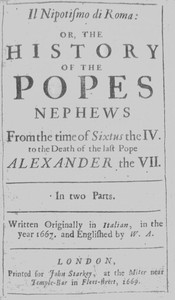
Il nipotismo di Roma, or, The History of the Popes Nephews: from the time of Sixtus IV. to the death of the last Pope, Alexander VII
Written by Gregorio Leti
Chaptra reads alongside you — AI insights, chapter breakdowns and reader discussions for every book. Join free
About this book
Read it with a club
Small groups reading the same books and talking as they go.


News
- 4 members
- 1,813 discussions
- Active Sep 11
Read Il nipotismo di Roma, or, The History of the Popes Nephews: from the time of Sixtus IV. to the death of the last Pope, Alexander VII alongside people who are reading it too.
Also here: News Bulletin, Just Joking....
Chaptra Prime — paid clubs, every club feature, and unlimited reading support, for $5 a month or $60 once.
See PrimeReading guide
Themes, characters and key ideas in Il nipotismo di Roma, or, The History of the Popes Nephews: from the time of Sixtus IV. to the death of the last Pope, Alexander VII, written by Chaptra AI.
- about 12 hours
- advanced
- Critical
- Historical
- Exposing
Gregorio Leti's "Il nipotismo di Roma" is a scathing 17th-century historical exposé that meticulously chronicles the pervasive practice of nepotism within the Roman Catholic Church from Sixtus IV to Alexander VII. Leti critically examines how Popes leveraged their ecclesiastical authority to elevate their relatives, known as 'nephews,' to positions of immense wealth and power, thereby enriching their families and establishing personal dynasties. The book highlights a significant paradigm shift where Popes transitioned from spiritual leaders to ambitious rulers, prioritizing familial advancement over the Church's spiritual mission. Through a detailed historical lens, Leti uncovers the intricate dynamics and moral implications of papal favoritism, presenting a provocative narrative of corruption and moral decline within the Vatican. It serves as both a historical record and a polemical critique of institutional malfeasance, drawing readers into the shadowy intrigues of the papal court.
“The sacred chair, once a bastion of piety, became a throne from which familial ambition dictated the destiny of nations.”
Key themes
- Nepotism and Familial Power
- This is the central theme, explored as the systematic favoritism shown by Popes to their relatives. Leti details how Popes used their authority to enrich their families, establish dynasties, and place relatives in key Church and secular positions, transforming the papacy into a vehicle for familial aggrandizement rather than spiritual governance.
- Corruption of Power
- Leti meticulously argues how the absolute power vested in the papacy was frequently corrupted by human ambition, leading to abuses for personal and familial gain. This theme highlights the moral compromises made by spiritual leaders when confronted with the temptations of temporal power and wealth.
- Moral Decline of the Church
- Leti posits that the systematic practice of nepotism contributed significantly to a decline in the moral authority and spiritual integrity of the Roman Catholic Church. This theme explores the erosion of trust, the perceived hypocrisy, and the shift from spiritual concerns to worldly pursuits within the highest echelons of the religious institution.
Worth discussing
How does Leti define and illustrate nepotism, and what are its perceived impacts on the Church's spiritual authority?
Chapter-by-chapter breakdowns, character arcs and the full thematic analysis come with a free account.
Discussions
No one has started one yet
Questions this book opens up
No discussions yet
Be the first to start a discussion about this book!
Sign up to start the discussionReviews
No reviews yet
Be the first to review this book!