
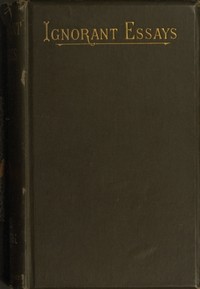
Ignorant Essays
Written by Richard Dowling
Chaptra reads alongside you — AI insights, chapter breakdowns and reader discussions for every book. Join free
About this book
Reading guide
Themes, characters and key ideas in Ignorant Essays, written by Chaptra AI.
- about 8 hours
- intermediate
- reflective
- humorous
- philosophical
Richard Dowling's "Ignorant Essays" is a captivating late 19th-century collection offering reflective and often humorous meditations on life's profound questions. Through a series of engaging essays, Dowling explores diverse subjects, from the elusive nature of dreams to the complex interplay between knowledge and ignorance, and unique interpretations of literature. The collection famously opens with a dialogue on wealth, personified by the 'ghost of a sixpence,' setting a whimsical yet philosophical tone for the explorations that follow. Dowling masterfully blends personal anecdotes, rich literary allusions, and philosophical inquiry, inviting readers into a contemplative journey through the human experience with a distinctive prose style.
“"True wealth, my friend, is often but the ghost of a sixpence, a whisper of what might be, more potent than any coin one might truly possess."”
Key themes
- The Nature of Dreams and Reality
- Dowling extensively explores the boundary between waking life and dreams, often suggesting that dreams hold a unique form of truth or insight. He questions the solidity of 'reality' and posits that the intangible experiences of the mind are as valid, if not more profound, than the material world. This theme connects to existential questions about perception and presence.
- The Intangible Nature of Value and Existence
- Introduced most powerfully by the 'ghost of a sixpence' metaphor, this theme explores how perceived value, whether of wealth, memories, or even life itself, is often more about intangible qualities and subjective interpretation than material presence. It delves into existential questions about what truly constitutes 'being' and 'worth.'
- Knowledge vs. Ignorance
- Dowling playfully challenges the conventional wisdom that knowledge is always superior. He suggests that a certain 'ignorance' can bring freedom from burden, a purity of thought, or an openness to wonder that excessive knowledge might obscure. This theme encourages a re-evaluation of what constitutes true understanding and wisdom.
Worth discussing
How does Dowling's metaphor of the 'ghost of a sixpence' challenge conventional notions of wealth and value?
Chapter-by-chapter breakdowns, character arcs and the full thematic analysis come with a free account.
Discussions
No one has started one yet
Questions this book opens up
No discussions yet
Be the first to start a discussion about this book!
Sign up to start the discussionReviews
No reviews yet
Be the first to review this book!